
Ideas, details & craftsmanship
Bar table height: how to calculate the right leg length
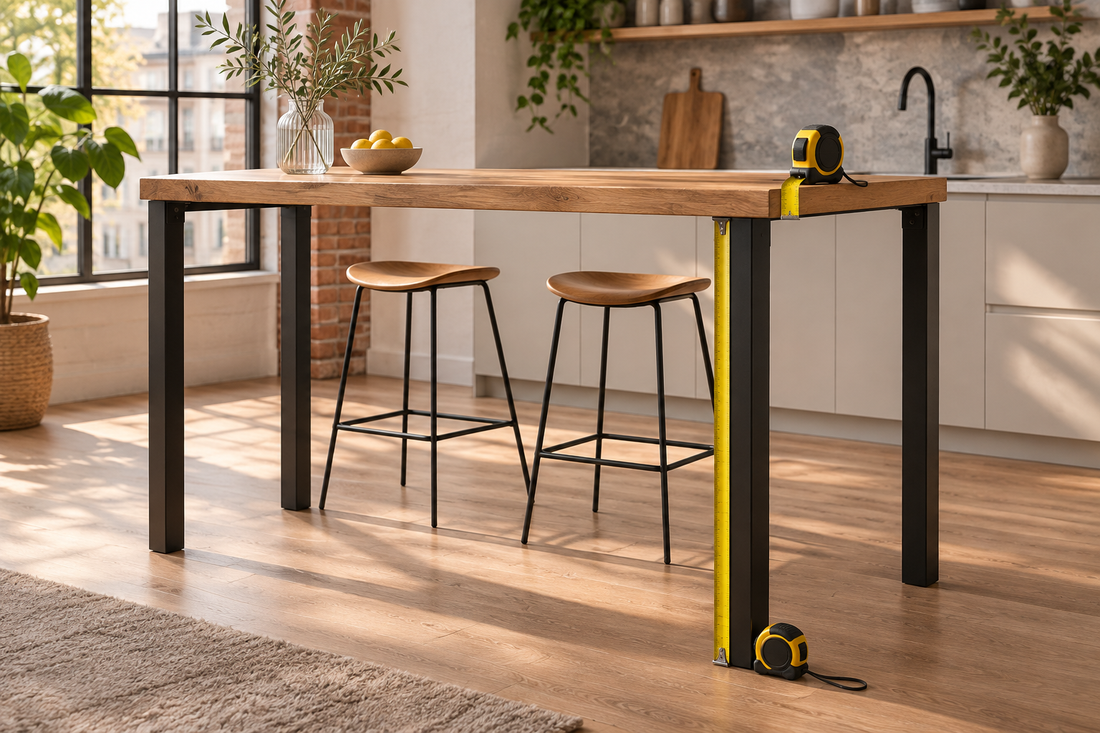
A bar table should be planned from the finished height at which you will sit or stand, not from a leg length seen in a photograph. Measure the stools you intend to use and test the relationship with a temporary board before buying. The comfortable result depends on the people, stool construction and intended use, so treat any common market height as a starting point rather than a universal rule.
Start with the finished surface
The calculation itself is simple: required leg height = desired finished table height − actual tabletop thickness − any separate mounting plate or spacer that adds height. Measure the real top at several points; a nominal “40 mm” solid-wood slab may not finish at exactly that dimension after sanding. Keep all measurements in millimetres until the final choice to avoid rounding errors.
Use one simple calculation
| Input | What to verify |
|---|---|
| Finished height | Floor to top surface |
| Top thickness | Actual measured thickness |
| Leg height | Finished height minus top and spacers |
| Stool | Seat, knees and footrest tested |
Worked examples for 90 and 100 cm legs
For example, a 90 cm leg with a 4 cm top produces a finished surface of about 94 cm, before adding any levelling foot or spacer. A 100 cm leg with the same top produces about 104 cm. These are arithmetic examples, not promises that either height suits every stool. TopFero’s active Leg product currently includes available 90 cm and 100 cm variants, so compare the calculated result with those actual options.
Check the stools before ordering
Place the stool on the finished floor, measure its seat height and mock up the table surface with a board. Sit down, stand up and check knees, thighs and footrest position. Also confirm that armrests, if present, can pass below the edge. For a standing table, test the main task: a quick coffee, laptop work and food preparation can favour different surface heights.
Do not ignore the tabletop and fixing
The tabletop is part of the structure. Check its weight, flat mounting area, edge profile and the screw length allowed by its thickness. Four independent legs also need a sufficiently rigid top and accurate positioning. A long or heavy slab may require a braced base rather than four separate legs; never infer load capacity only from the height of a leg.
A practical buying checklist
Before ordering, record the target finished height, exact top thickness, stool seat height, mounting-zone dimensions and floor level. Then calculate the leg height, make a full-size mock-up and verify the product variant again. Browse the current metal table-leg collection if the 90 or 100 cm option does not match the result; do not “fix” a large height error with thick packing pieces.
View the Leg table leg in 90 and 100 cm · Browse all metal table legs
More ideas for your next project

Where should table legs go? Plan the spacing before drilling
Plan table-leg placement from the mounting plates, tabletop construction and seating clearance. Use a simple spacing formula before drilling.
Read the guide : Where should table legs go? Plan the spacing before drilling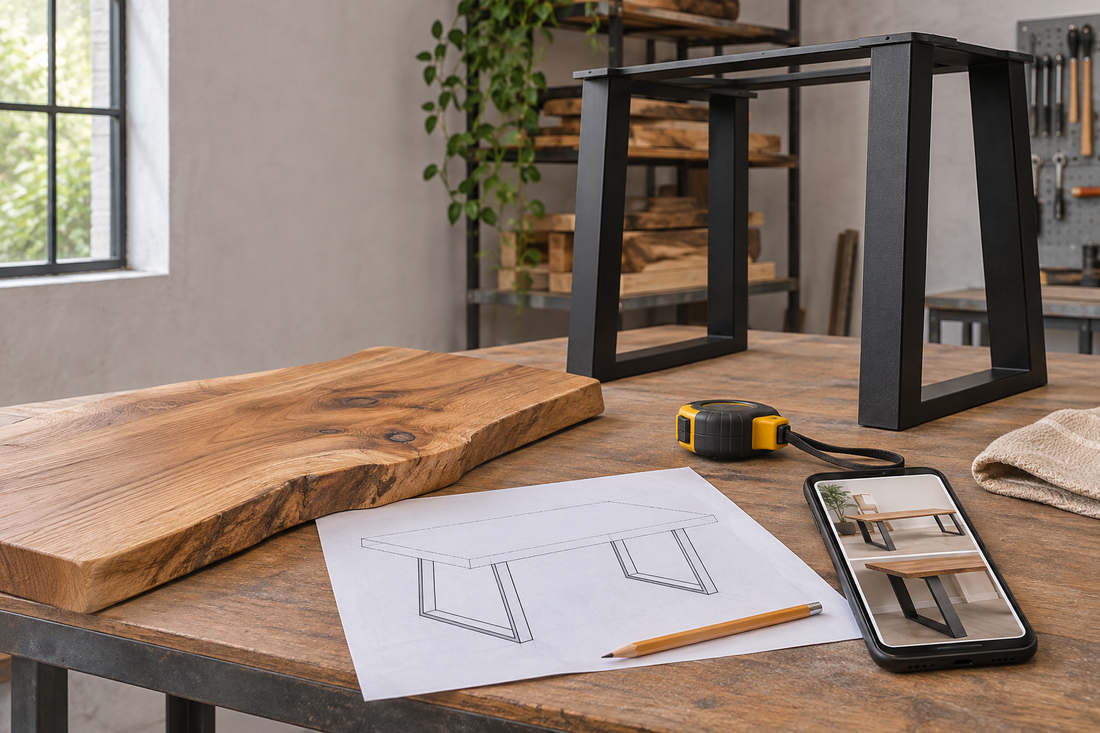
Custom table base: what measurements and photos to send
A practical checklist for requesting a custom metal table base: tabletop dimensions, target height, mounting area, room constraints and useful photos.
Read the guide : Custom table base: what measurements and photos to send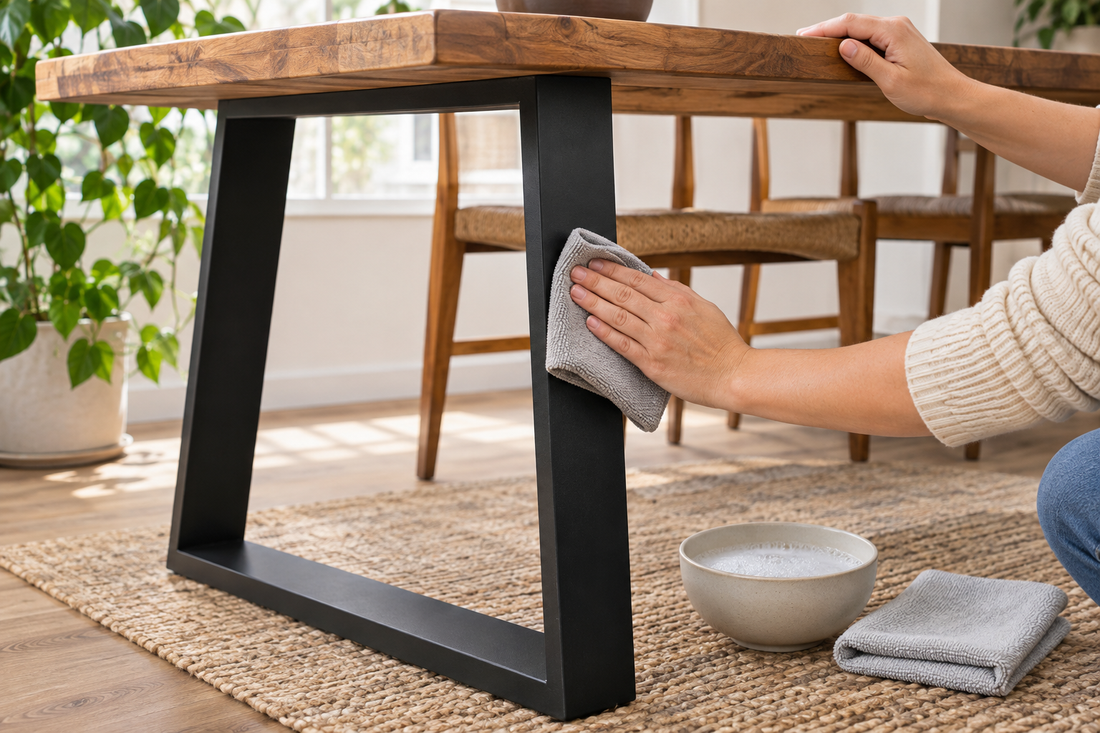
How to clean powder-coated metal table legs
Clean powder-coated table legs with a soft cloth, lukewarm water and a mild neutral cleaner. Avoid abrasives, strong solvents and soaking joints.
Read the guide : How to clean powder-coated metal table legs