
Ideas, details & craftsmanship
Custom table base: what measurements and photos to send
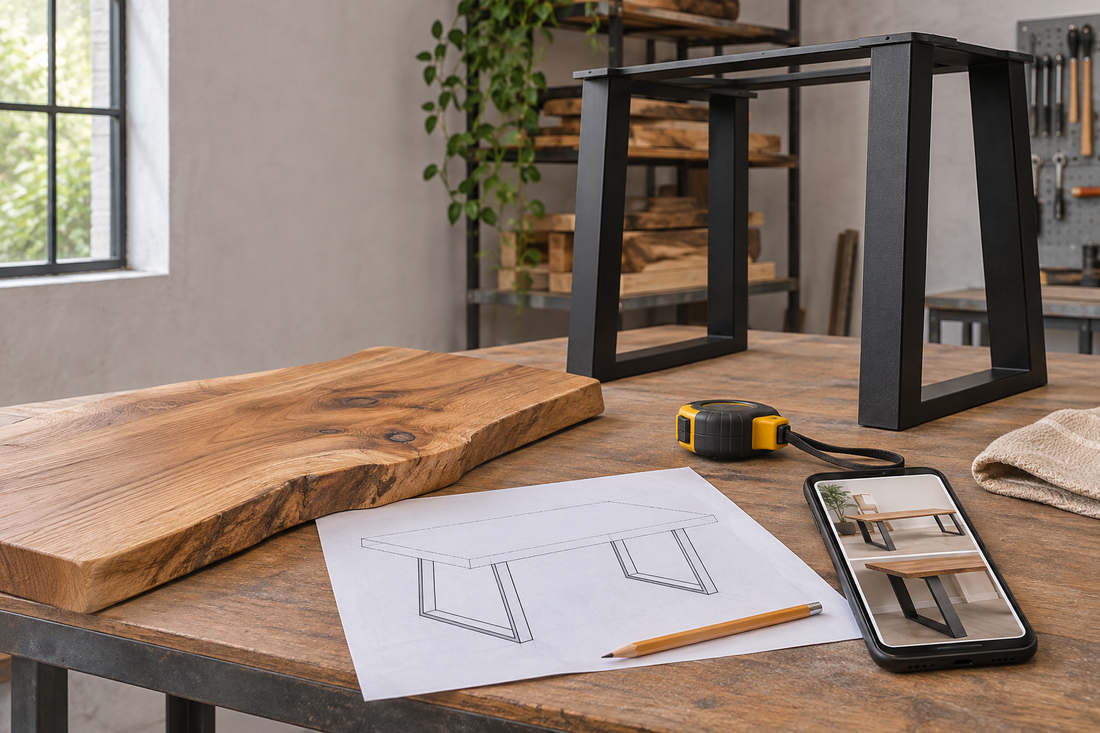
For a useful custom table-base quote, send the finished tabletop length, width and thickness; material and approximate weight; desired finished table height; usable mounting area underneath; preferred base position; seating and legroom needs; access constraints; and clear photos of the top from above, below and from the edge. A simple dimensioned sketch is more useful than a mood image alone.
Start with the finished table
A custom base should be specified from the finished table, not from a standalone leg photo. The same visual shape can require a different width, position or connection when the top is thicker, heavier or has a live edge.
The eight details that make a quote possible
| Detail | What to send |
|---|---|
| Finished size | Length × width × thickness of the actual top |
| Top construction | Material, edge shape, reinforcing rails and approximate weight |
| Target height | Finished floor-to-top height, including the tabletop |
| Mounting zone | Flat usable area underneath and locations that cannot be drilled |
| Use | Dining, desk, meeting table, bench or another load case |
| Clearances | Chairs, knees, drawers, cables and floor skirting |
| Access | Doorways, stairs, lift and whether the base must be demountable |
| Visual direction | Shape, colour and finish references, clearly marked as inspiration |
Measure the tabletop, not only the room
Measure the top at its widest points and photograph the underside in good light. Mark inserts, cracks, aprons, cable trays and uneven areas. If the top does not yet exist, state that explicitly and provide the planned construction rather than a guessed weight.
Show the underside and edges
Describe how many people should sit on each side and where chairs must pass. For a desk, add the chair position, drawers and cable routes. For a dining table, show end seating and any radiator, wall or skirting that limits the footprint.
State what must fit around the base
Reference photos help communicate style, but they do not prove dimensions, stability or compatibility. Do not copy a photo without identifying what you actually like: the angle, profile, colour, central position or open legroom. Final feasibility must be assessed from the real measurements and intended use.
Separate appearance from engineering
Do not assume an old drilling pattern can be reused or that every solid-wood top can be fixed the same way. Do not state a required load capacity without explaining what will be placed on the table. A quote may still require follow-up questions or a technical drawing before production.
What not to assume
Put all measurements in one unit, label every photo and include your country and delivery postcode. Send the brief through the TopFero custom-production contact page. If a standard solution may work, compare it first with the current metal table-leg collection; this can shorten lead time and avoid unnecessary custom work.
More ideas for your next project

Where should table legs go? Plan the spacing before drilling
Plan table-leg placement from the mounting plates, tabletop construction and seating clearance. Use a simple spacing formula before drilling.
Read the guide : Where should table legs go? Plan the spacing before drilling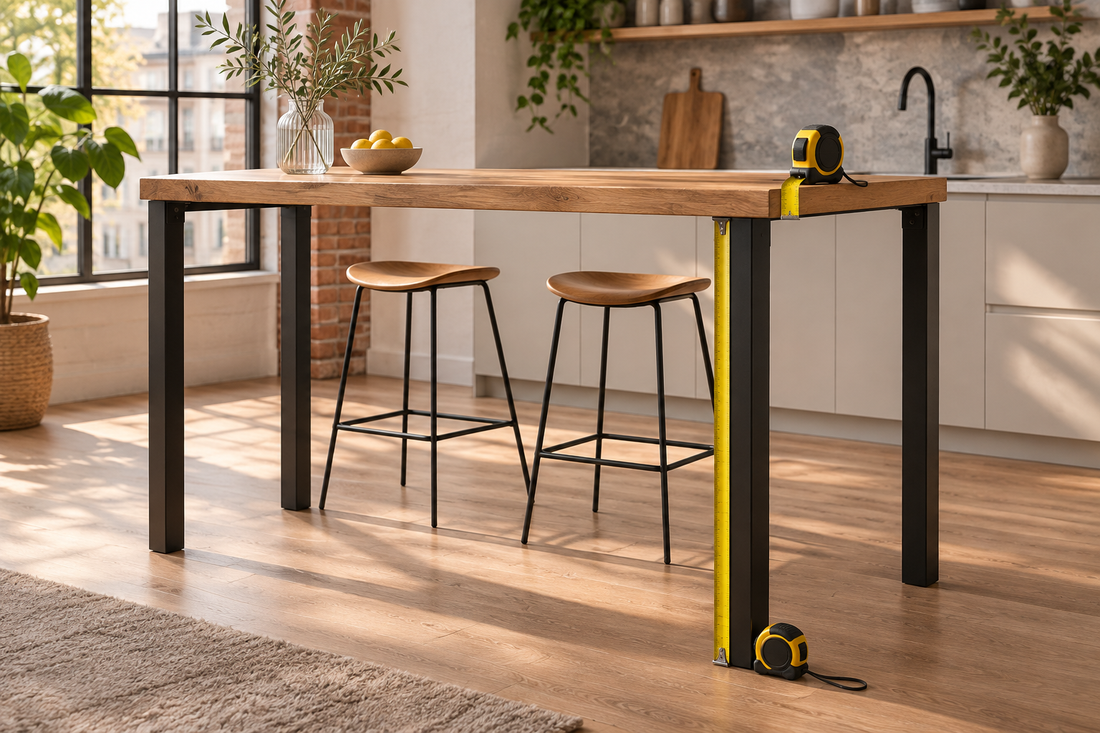
Bar table height: how to calculate the right leg length
Calculate bar-table leg height from the finished surface, tabletop thickness and stools, then check mounting and stability before ordering.
Read the guide : Bar table height: how to calculate the right leg length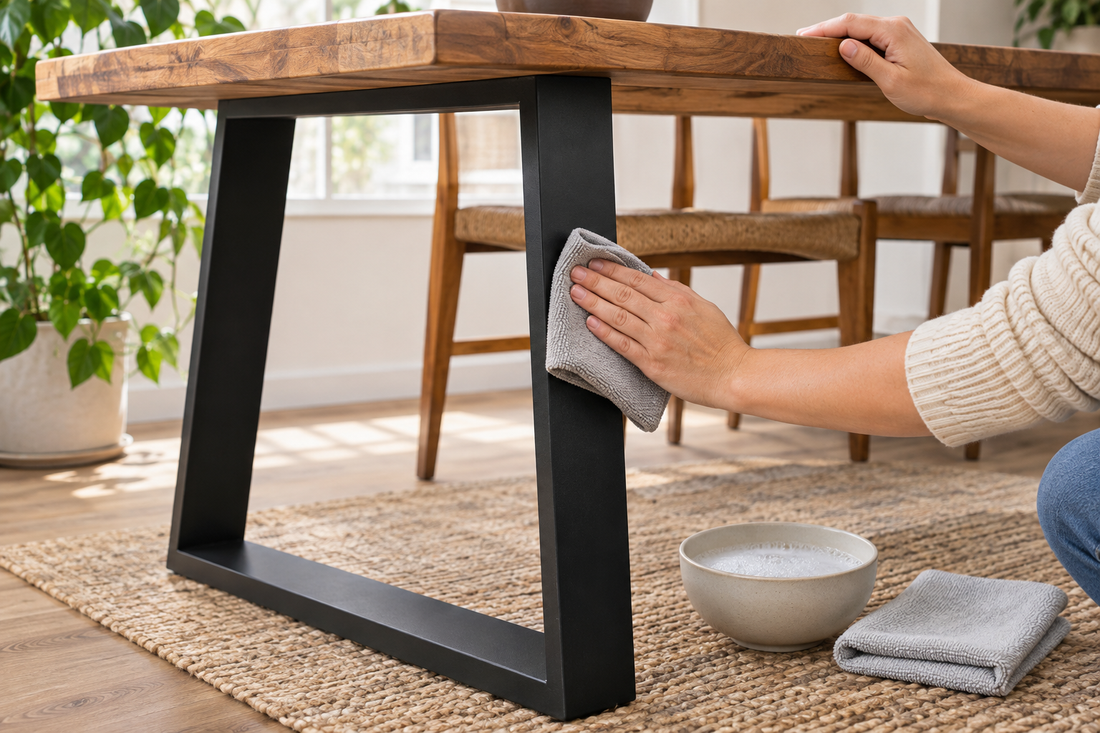
How to clean powder-coated metal table legs
Clean powder-coated table legs with a soft cloth, lukewarm water and a mild neutral cleaner. Avoid abrasives, strong solvents and soaking joints.
Read the guide : How to clean powder-coated metal table legs