
Ideas, details & craftsmanship
How to clean powder-coated metal table legs
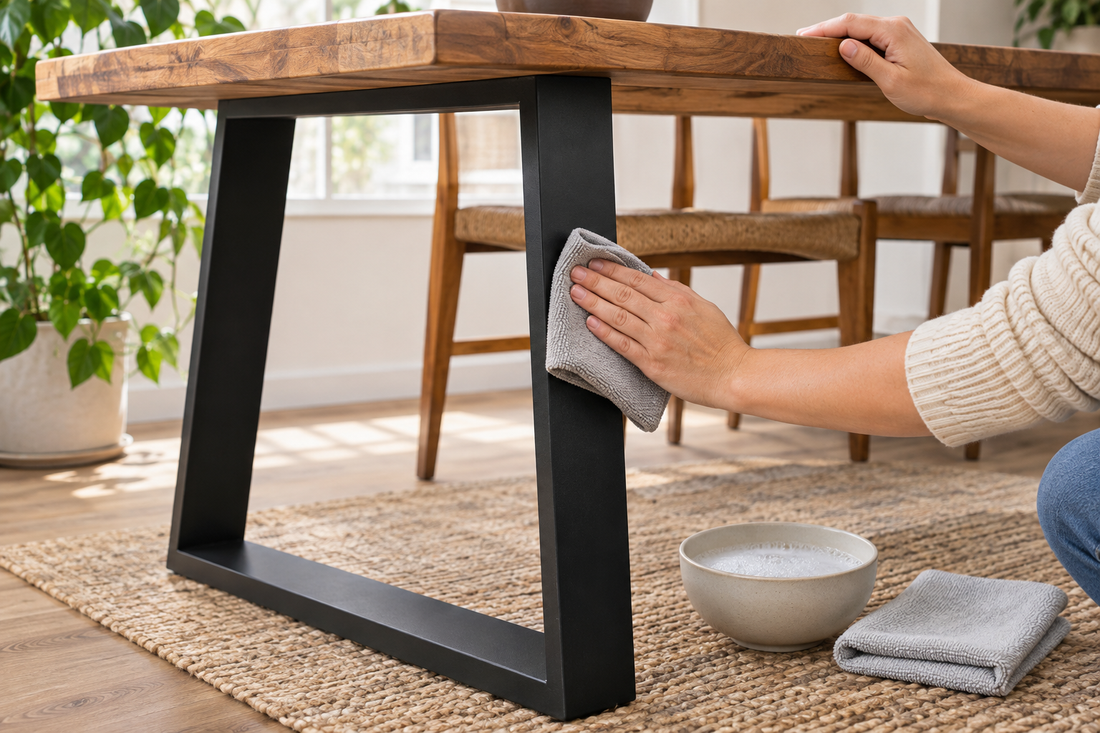
For routine cleaning, wipe powder-coated metal table legs with a soft microfiber cloth, lukewarm water and a small amount of mild, neutral detergent. Remove the residue with a clean damp cloth, then dry the surface. Do not begin with an abrasive pad, concentrated chemical or solvent: the correct method depends on the exact coating and the type of contamination.
First confirm what finish you have
Powder coating is a finish, not a cleaning instruction for every metal product. Check the product description, care card or supplier guidance before treating a mark. The active TopFero Atria base, for example, is described as a steel construction with a powder-coated surface. That confirms the finish on this model, but it does not make every cleaner suitable or prove that another product has the same coating.
A safe routine in six steps
- Remove loose dust with a clean, dry microfiber cloth.
- Mix a little mild neutral detergent with lukewarm water.
- Dampen the cloth; do not pour water directly over the leg or joints.
- Wipe gently from the clean area toward the dirty area.
- Use a second clean damp cloth to remove detergent residue.
- Dry the surface, edges, feet and connections immediately.
Work on one small section first. If the colour, gloss or texture changes, stop and contact the product supplier before continuing.
Choose the method by the type of dirt
| Contamination | First action | Avoid |
|---|---|---|
| Dust and fingerprints | Dry or lightly damp microfiber cloth | Hard rubbing |
| Food or drink splash | Blot promptly, then use mild soapy water | Letting residue dry at a joint |
| Greasy film | Diluted neutral cleaner after a spot test | Concentrated degreaser directly on the finish |
| Paint transfer or unknown mark | Stop and identify it | Solvent experiments |
| Chip, cut or rust-coloured spot | Keep dry, photograph and ask the supplier | Sanding or hiding it with random paint |
What not to use by default
Avoid steel wool, abrasive sponges, scouring powder, knives and hard brushes. Do not assume acetone, thinner, chlorine cleaner, strong acid, strong alkali or an aggressive degreaser is safe. Pressure washing and soaking can drive water into feet, fasteners and uncoated edges. Steam and very hot water can also affect surrounding materials even when the metal appears unchanged.
Pay attention to edges and joints
Dirt and moisture often remain around floor contacts, mounting plates and welds. Clean these areas with the cloth rather than flooding them. Dry them after washing and inspect for a damaged coating film. A surface chip is not the same as ordinary dirt: cleaning cannot restore the protective layer.
Do not improvise a touch-up
If the coating is scratched through, record the location and product model. A repair colour can look similar yet differ in chemistry, texture and gloss. Ask the manufacturer for the correct repair route before sanding, polishing or applying paint. This is especially important where the damage reaches bare steel or sits near a frequently wet area.
A practical maintenance rhythm
There is no useful universal calendar. Clean spills promptly and inspect the legs during normal room cleaning. Increase attention where shoes, chair parts, pets, moisture or cleaning machines contact the frame. The aim is to remove contamination before it becomes difficult without over-cleaning an intact finish.
Check a real powder-coated product
Browse the TopFero metal table-leg collection and confirm the finish in the exact product description. The active Atria table base is documented as powder coated and is a relevant example for this care method. The featured image is an illustrative cleaning scene, not a chemical approval or a photograph of a specific TopFero model.
More ideas for your next project

Where should table legs go? Plan the spacing before drilling
Plan table-leg placement from the mounting plates, tabletop construction and seating clearance. Use a simple spacing formula before drilling.
Read the guide : Where should table legs go? Plan the spacing before drilling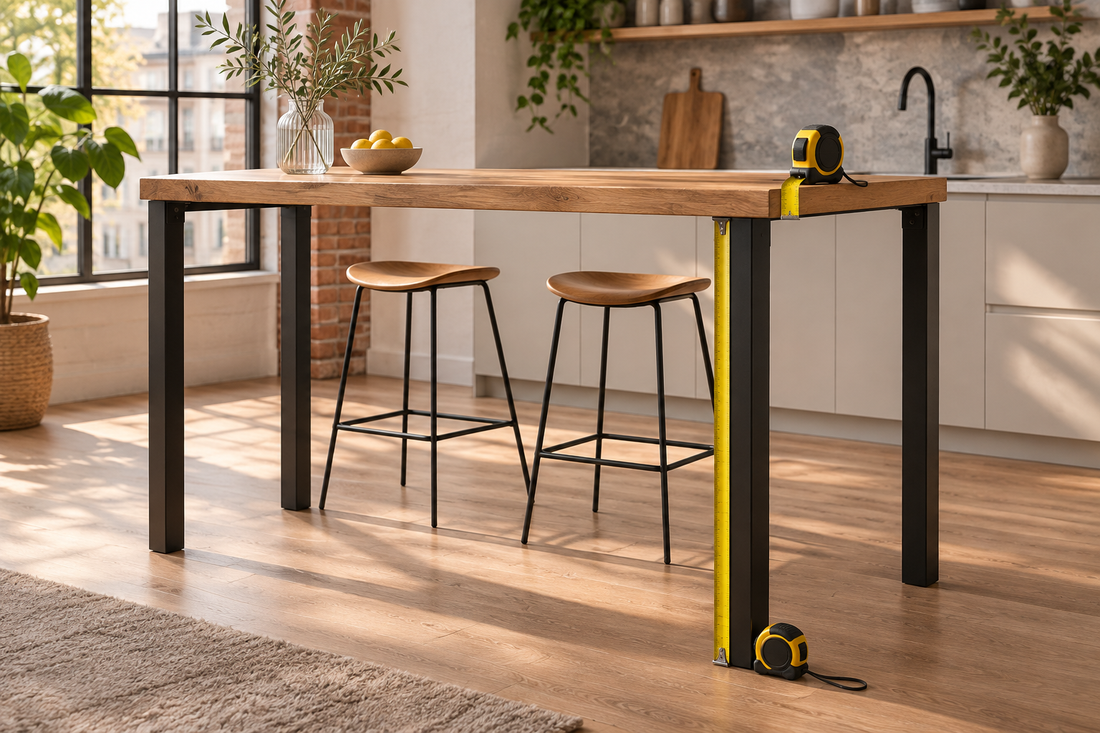
Bar table height: how to calculate the right leg length
Calculate bar-table leg height from the finished surface, tabletop thickness and stools, then check mounting and stability before ordering.
Read the guide : Bar table height: how to calculate the right leg length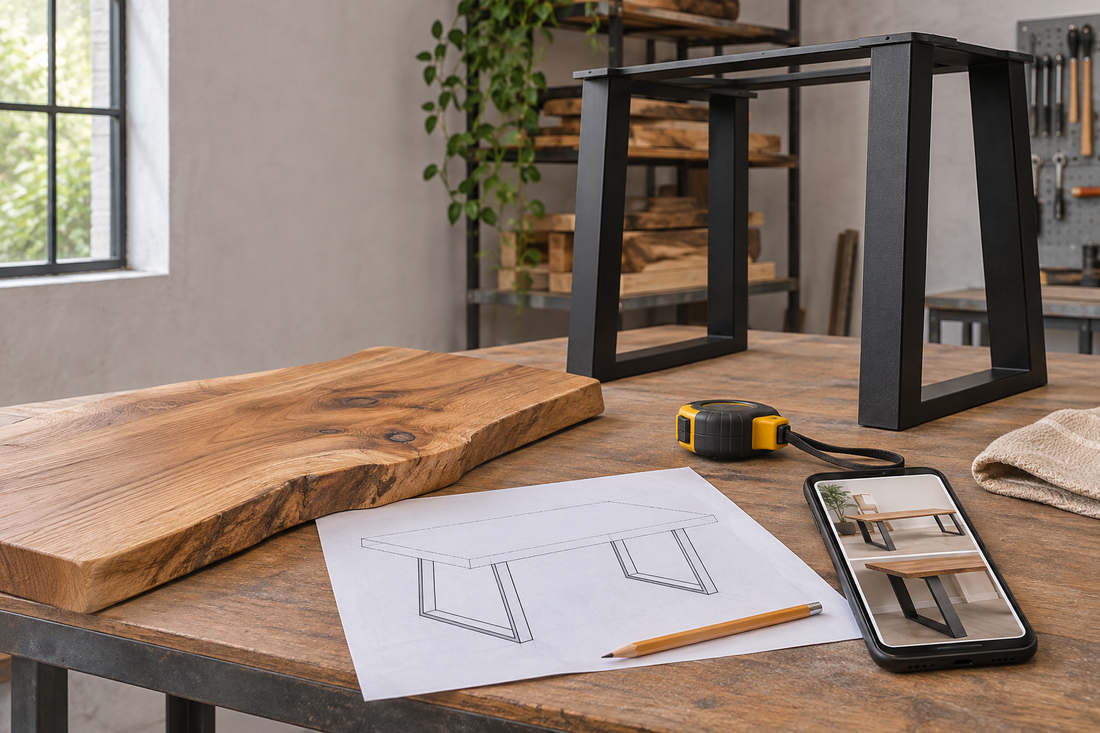
Custom table base: what measurements and photos to send
A practical checklist for requesting a custom metal table base: tabletop dimensions, target height, mounting area, room constraints and useful photos.
Read the guide : Custom table base: what measurements and photos to send