
Ideas, details & craftsmanship
Extendable table legs: how to plan support in both positions
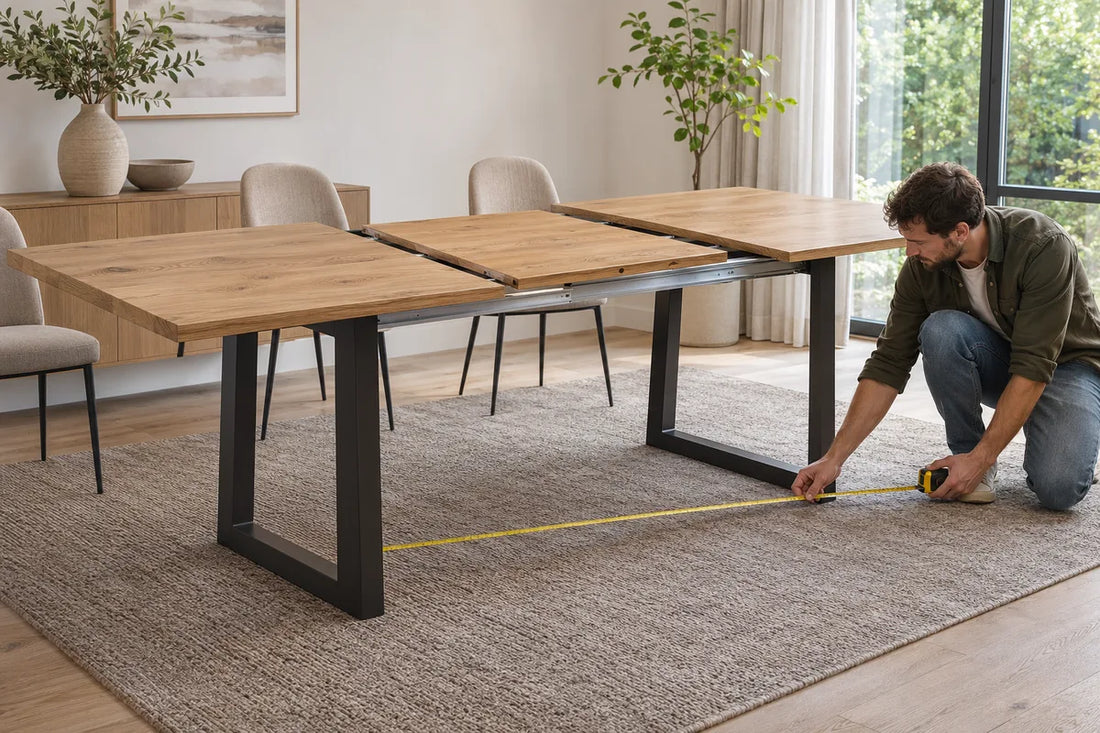
Choose legs for an extendable table only after you understand how the tabletop opens. The legs must support the table in both positions without blocking the runners, insert leaves, knees or chairs. A set of legs does not make a fixed tabletop extendable: the tabletop and its extension mechanism must already be designed to work together.
Measure the closed and open table
Record the closed length Lc, open length Lo, tabletop width and thickness, and the position of every rail, latch and mounting zone underneath. If one or more insert leaves account for the full change, their combined length is I = Lo − Lc. For example, a table that changes from 160 to 220 cm has 60 cm of added length. This is geometry only; it does not approve a particular leg or mechanism. Also record where each support stands when closed and when open.

Check what moves with the tabletop
Some systems split at the centre, while others move one end or use a separate frame. Identify which parts carry the load, where the rails travel and whether the legs move with each half. Keep mounting plates clear of moving hardware. Do not drill until the real mechanism, screw zones and tabletop construction have been checked against the product instructions.
Test seating before fixing the legs
Lay out chairs in both positions. End seats need knee and foot space; side seats must not land directly against a leg or cross-member. Mark the support outline on the floor and underside of the top, then open and close the table through its full movement. Check uneven floors and the path used to insert or store leaves.
- Closed and open tabletop dimensions
- Total insert-leaf length and storage method
- Support positions and clear mounting zones in both states
- Rail, latch and cross-member movement
- Chair, knee and walking clearance at every seat

Use products as verified examples, not universal matches
TopFero currently lists Atria Split and Thusia Split as active products in the extendable-leg collection. They are relevant examples of a split construction, but compatibility cannot be inferred from a photo or product name. Compare the exact selected variant, dimensions and mounting requirements with your tabletop system. If the table is especially long when open, also review the long-table support guide and provide TopFero with the closed/open measurements and underside photos.
Browse extendable table legs · View Atria Split · View Thusia Split · Read the long-table support guide
More ideas for your next project
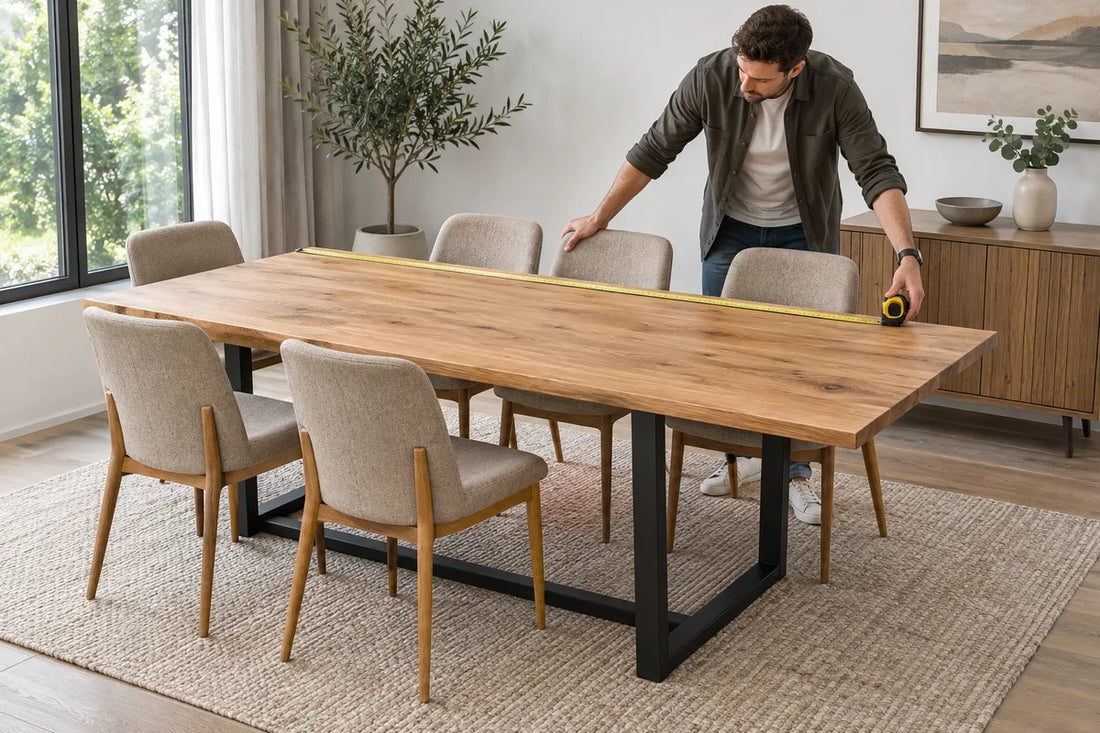
Dining table size for 6 or 8 people: choose the right base
Plan a rectangular table for six or eight seats, calculate the usable length and check the metal base before ordering.
Read the guide : Dining table size for 6 or 8 people: choose the right base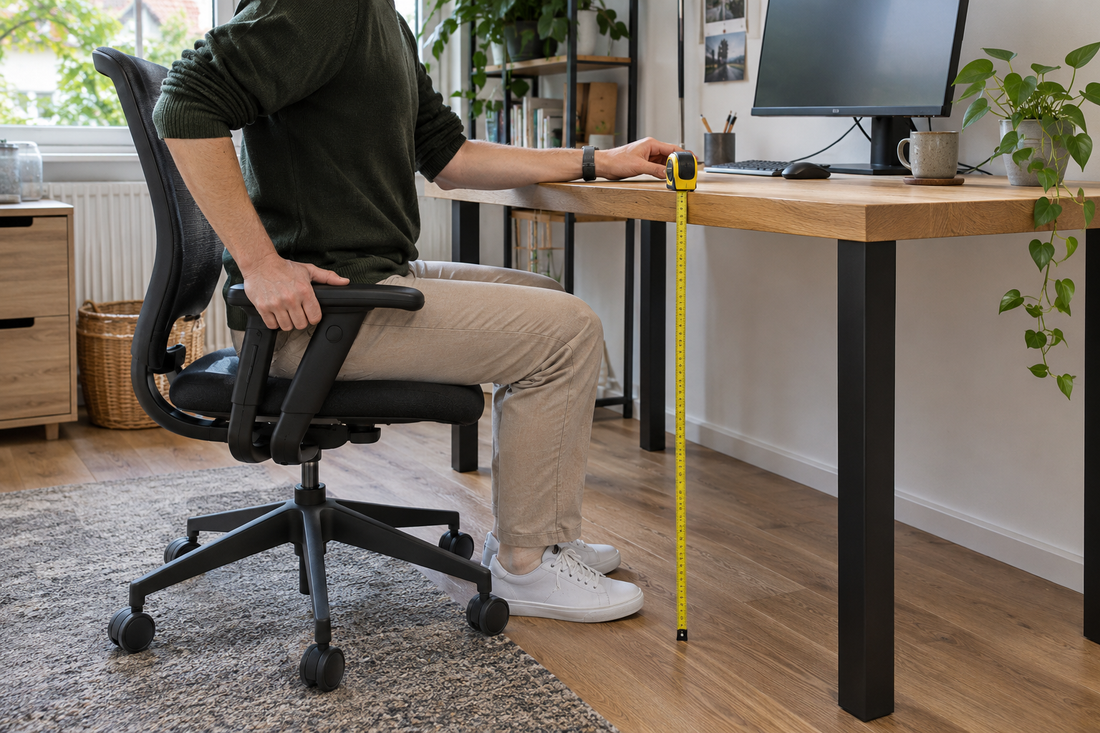
Desk height: calculate the right table-leg length
Calculate desk-leg height from the finished surface and top thickness, then test chair, elbows, knees and equipment before ordering.
Read the guide : Desk height: calculate the right table-leg length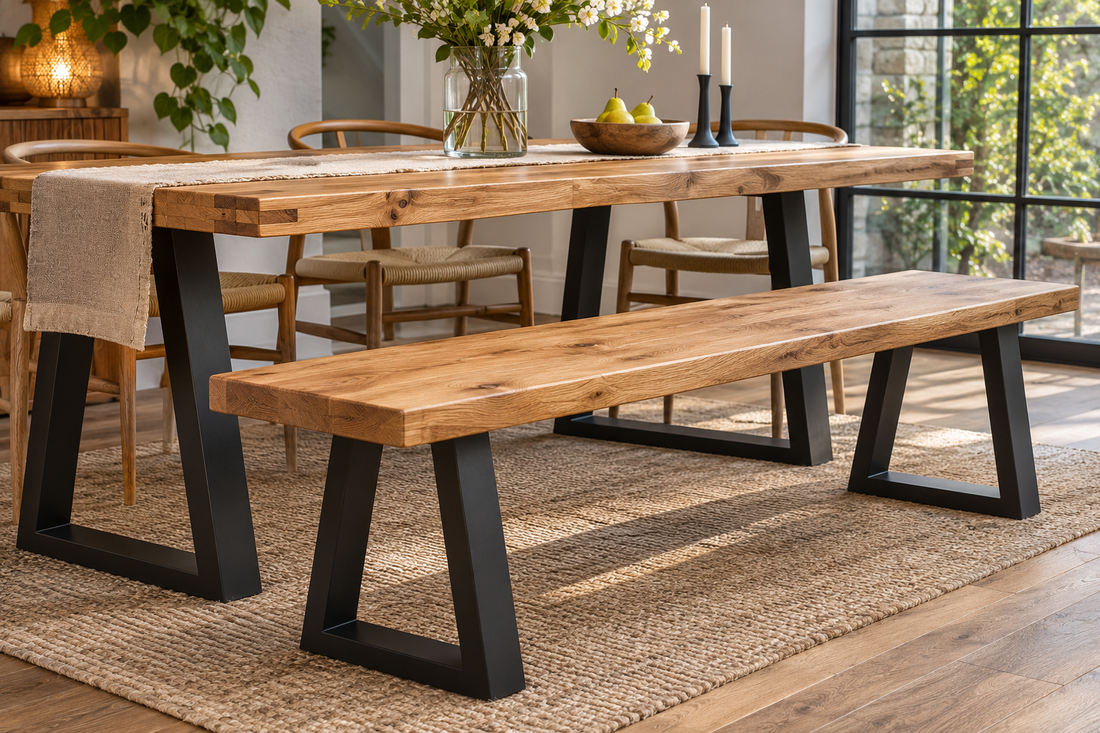
How to choose metal bench legs: height, spacing and seat board
Choose bench legs from the finished seat height, board construction, support spacing and table clearance—not appearance alone.
Read the guide : How to choose metal bench legs: height, spacing and seat board