
Ideas, details & craftsmanship
How to choose a table base for a 180–200 cm tabletop
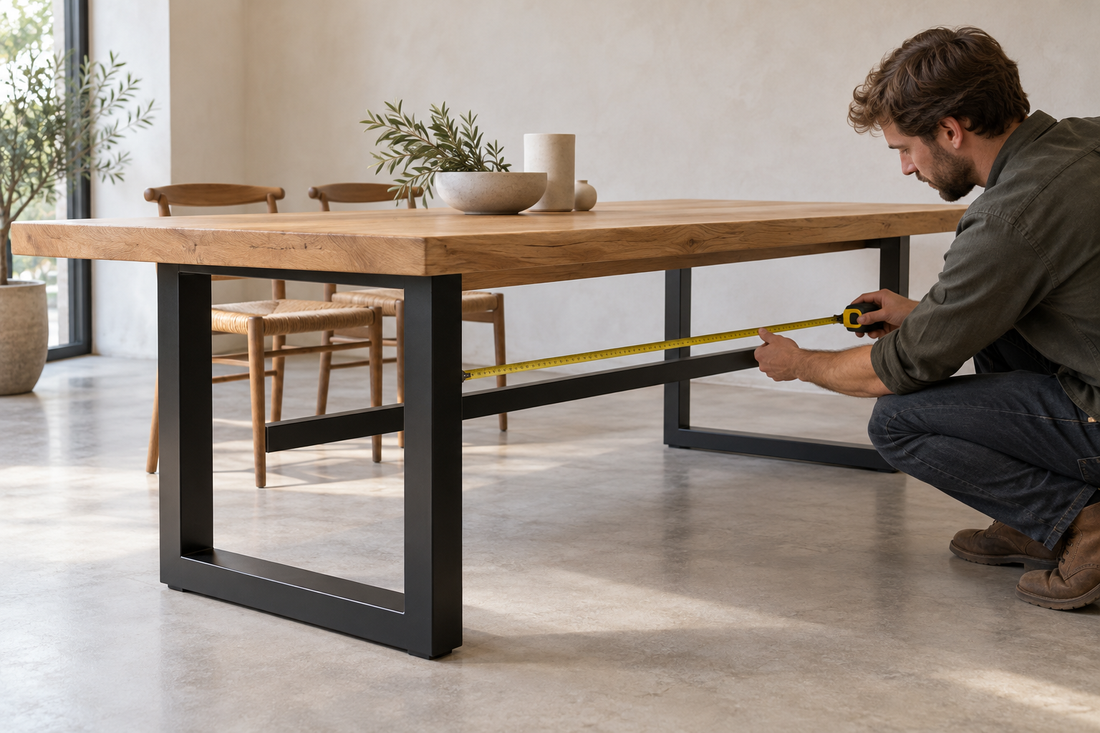
For a 180–200 cm tabletop, choose the base from the real support span and the tabletop construction, not from length alone. A connected frame can control sideways movement better, while separate legs allow more freedom in placement.
Measure the top before looking at bases
Record length, width, thickness, material, construction and approximate weight. Photograph the underside and mark joints, inserts and obstacles. Solid wood, laminated panels and composite tops can require different fastening and support.
Calculate the end overhang
Use: end overhang = (top length − outside support span) ÷ 2. For example, a 200 cm top with a 150 cm outside support span has 25 cm overhang at each end. This is geometry, not a universal structural approval: confirm the allowed span in the exact tabletop and base documentation.
Check seating and knee space
Mark chair positions and the space needed to sit down. Crossbars, wide plates and legs placed too far inward can reduce usable seating. Test the layout on the underside with tape before drilling.
Separate top support from frame stiffness
A base must support the top and resist sideways movement. Long or heavy tops can expose flex that is less noticeable on a small table. Compare connected frames with separate legs using the verified product drawing and mounting points.
Allow for wood movement
Solid wood changes across the grain. Use the fastening method recommended for the tabletop and hardware; do not lock a moving solid-wood top with an improvised rigid pattern.
Choose from verified dimensions
Compare TopFero metal table legs and table bases by overall width, mounting layout and construction. Send the tabletop measurements and underside photos if compatibility is unclear.
A practical selection sequence
- Measure the tabletop and draw the underside to scale.
- Choose the seating layout before the base width.
- Calculate both end overhangs and mark the mounting plates.
- Check the tabletop maker's permitted unsupported span and fastening method.
- Only then compare a connected frame with separate legs.
For a 200 cm top, a base offered in a 180 cm structural size is a useful product candidate, but the variant number alone does not prove compatibility. The Acamar Extreme connected base is currently active in sizes including 180, 200, 220 and 240 cm. Compare its actual drawing, mounting pattern and finished table height with your top; do not select it only because one number resembles the top length.
What to send when asking for a compatibility check
- length, width and thickness of the top;
- material and construction, including live edge or glued boards;
- estimated weight and manufacturer documentation;
- clear underside photograph with existing holes and inserts;
- desired chair positions and number of seats;
- indoor or outdoor use.
This information separates three different questions: whether the top has enough support, whether the frame can resist sideways movement, and whether people can sit comfortably. A metal base cannot correct an unsuitable or already damaged tabletop. If any structural value is missing, ask the tabletop supplier before drilling.
More ideas for your next project

Where should table legs go? Plan the spacing before drilling
Plan table-leg placement from the mounting plates, tabletop construction and seating clearance. Use a simple spacing formula before drilling.
Read the guide : Where should table legs go? Plan the spacing before drilling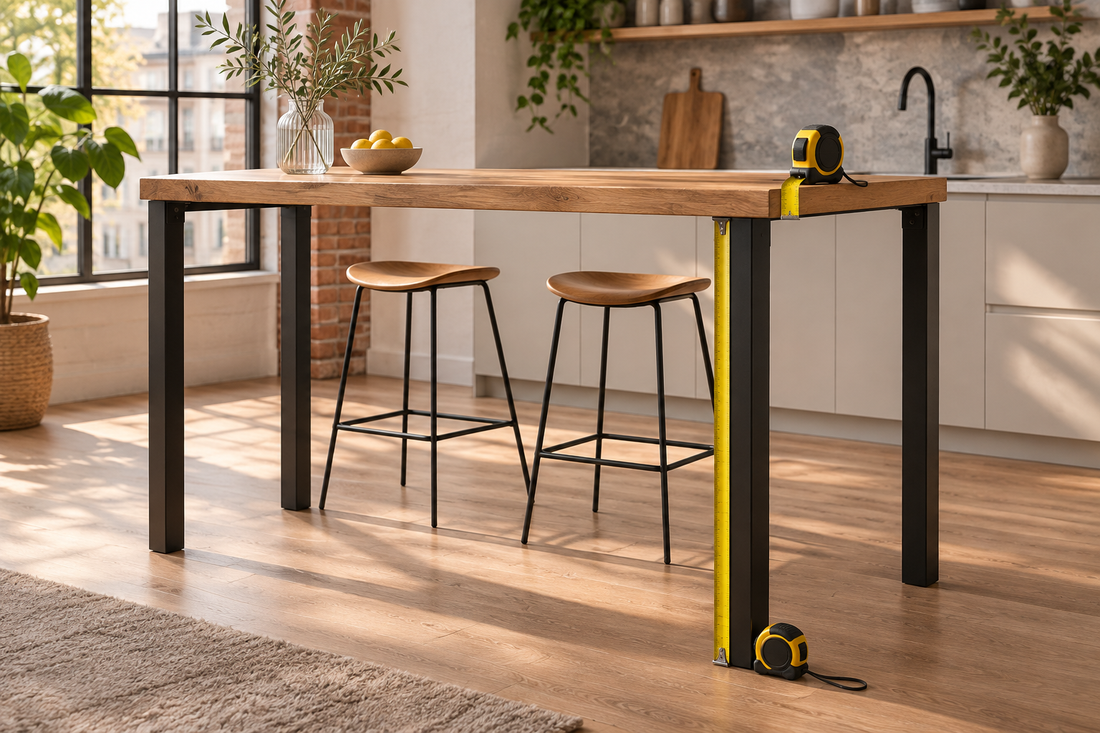
Bar table height: how to calculate the right leg length
Calculate bar-table leg height from the finished surface, tabletop thickness and stools, then check mounting and stability before ordering.
Read the guide : Bar table height: how to calculate the right leg length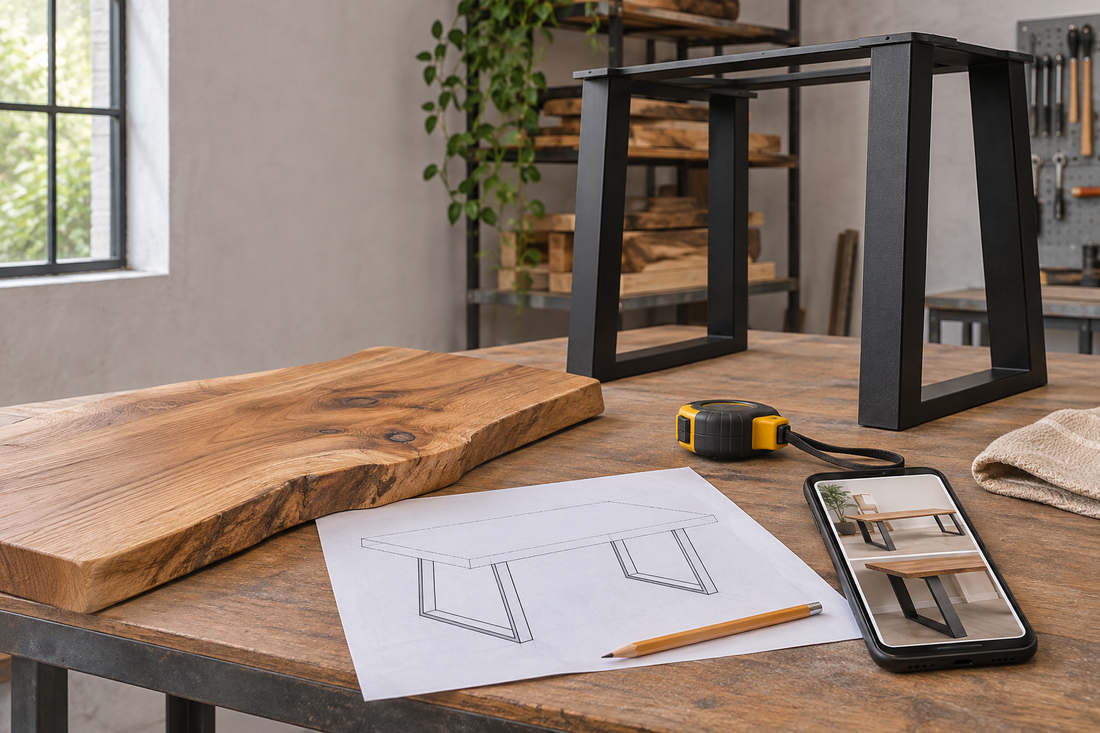
Custom table base: what measurements and photos to send
A practical checklist for requesting a custom metal table base: tabletop dimensions, target height, mounting area, room constraints and useful photos.
Read the guide : Custom table base: what measurements and photos to send