
Ideas, details & craftsmanship
Coffee table height: how to choose the right legs for your sofa
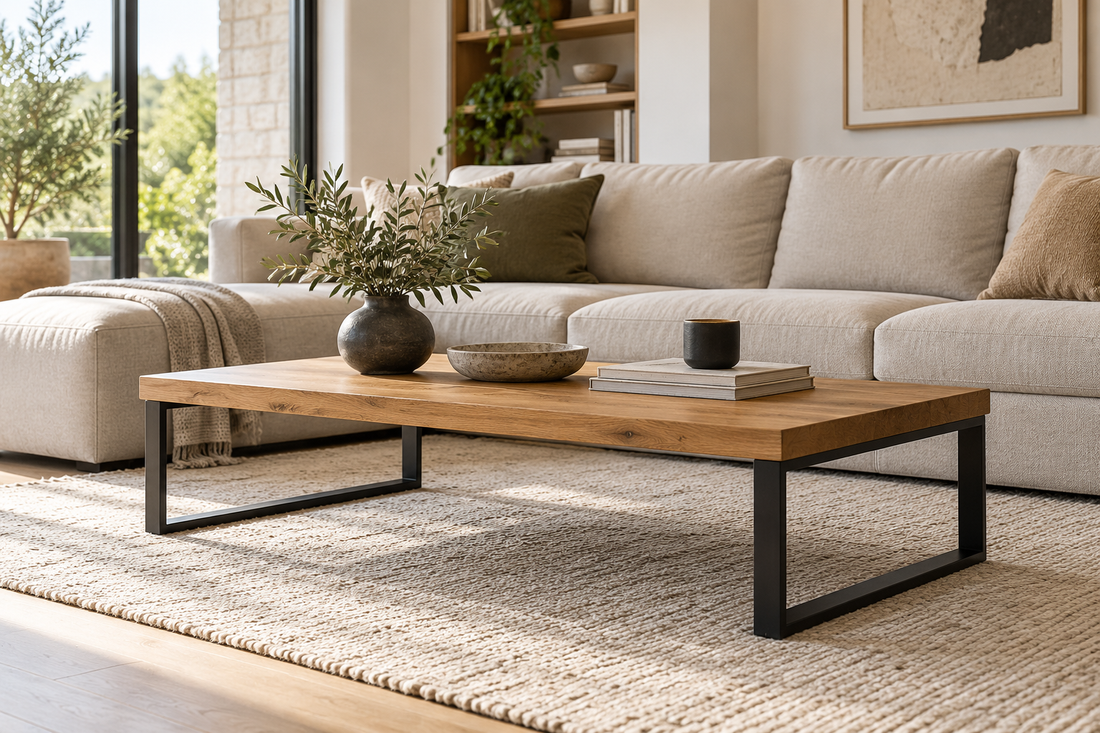
A coffee table works best when its finished top sits close to the sofa seat height. Measure your own room: sofas, cushions and tops vary, and a few centimetres change comfort.
Use the sofa as the starting point
Sit normally and measure from the floor to the compressed seat cushion. Aim for a surface around the same height or slightly lower. If you often eat or work there, test a higher mock-up first.
Calculate the leg height
Finished height equals leg height plus finished tabletop thickness, including pads or spacers. Required leg height = desired finished height − tabletop thickness. If the target is 42 cm and the top is 3 cm, the legs should contribute about 39 cm. Confirm the product drawing because plates and adjustable feet can alter the result.
Check reach and clearance
Tape the planned outline on the floor. Sit, reach to the centre and stand up normally. Check the walking gap, knees and feet. A low table can still feel bulky when a cross rail occupies foot space.
Match legs to the top
Record finished length, width, thickness, construction and estimated weight. Compare these with the mounting plate, support spacing and load information. Keep screws away from weak edges and cracks. Follow the tabletop maker's fixing method for solid wood movement.
Balance and stability
End frames suit rectangular tops. Individual legs offer freedom for unusual shapes but require careful positioning. Before drilling, inspect the overhang from the sofa and entrance, and confirm stability near an edge.
Choose with verified measurements
Compare TopFero metal table legs by height, width and construction. Open the exact product drawing. If the fit is unclear, send the finished dimensions, weight and an underside photo before ordering.
More ideas for your next project
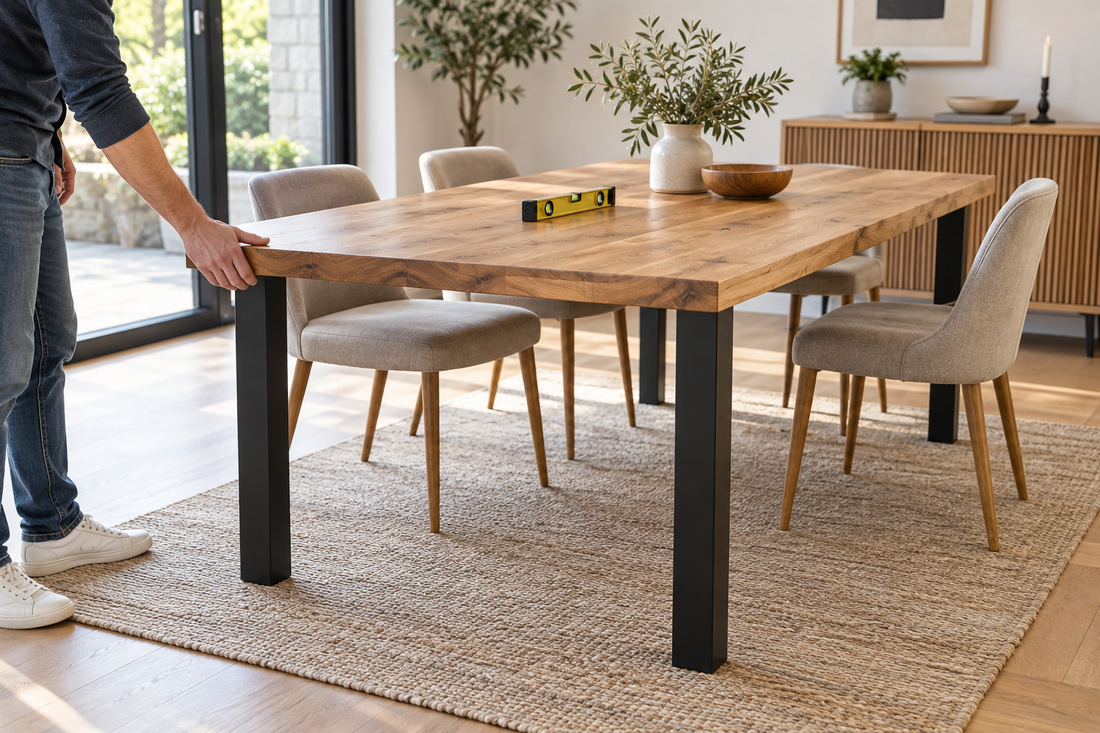
Why does a table wobble? Diagnose it before replacing the legs
Find the real cause of a wobbly table by checking the floor, feet, fasteners, tabletop and frame in the right order.
Read the guide : Why does a table wobble? Diagnose it before replacing the legs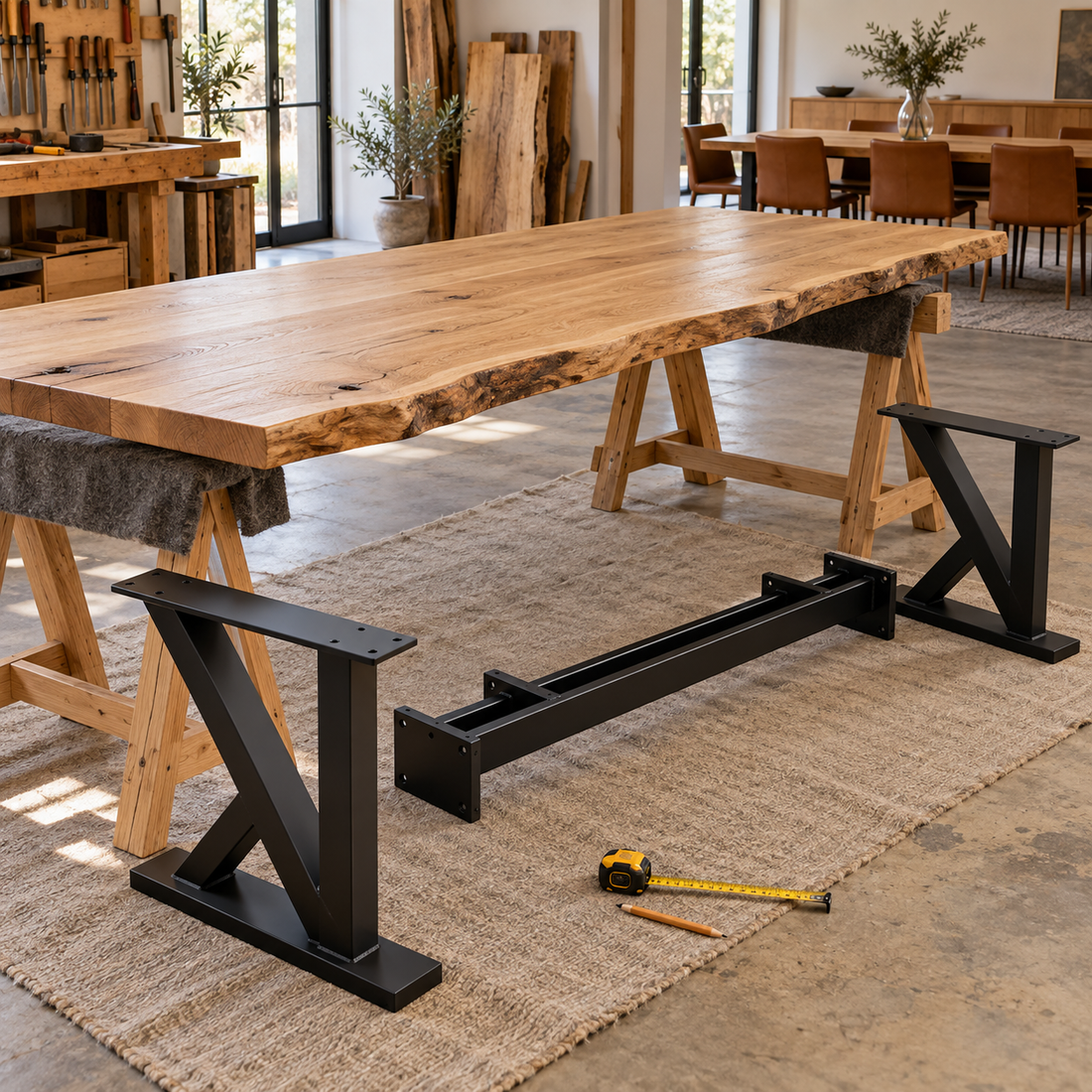
Metal table legs for a solid-wood top: what to check before drilling
Choose metal legs for a solid-wood tabletop by checking the slab, support layout, movement allowance, fasteners, seating clearance and total weight.
Read the guide : Metal table legs for a solid-wood top: what to check before drilling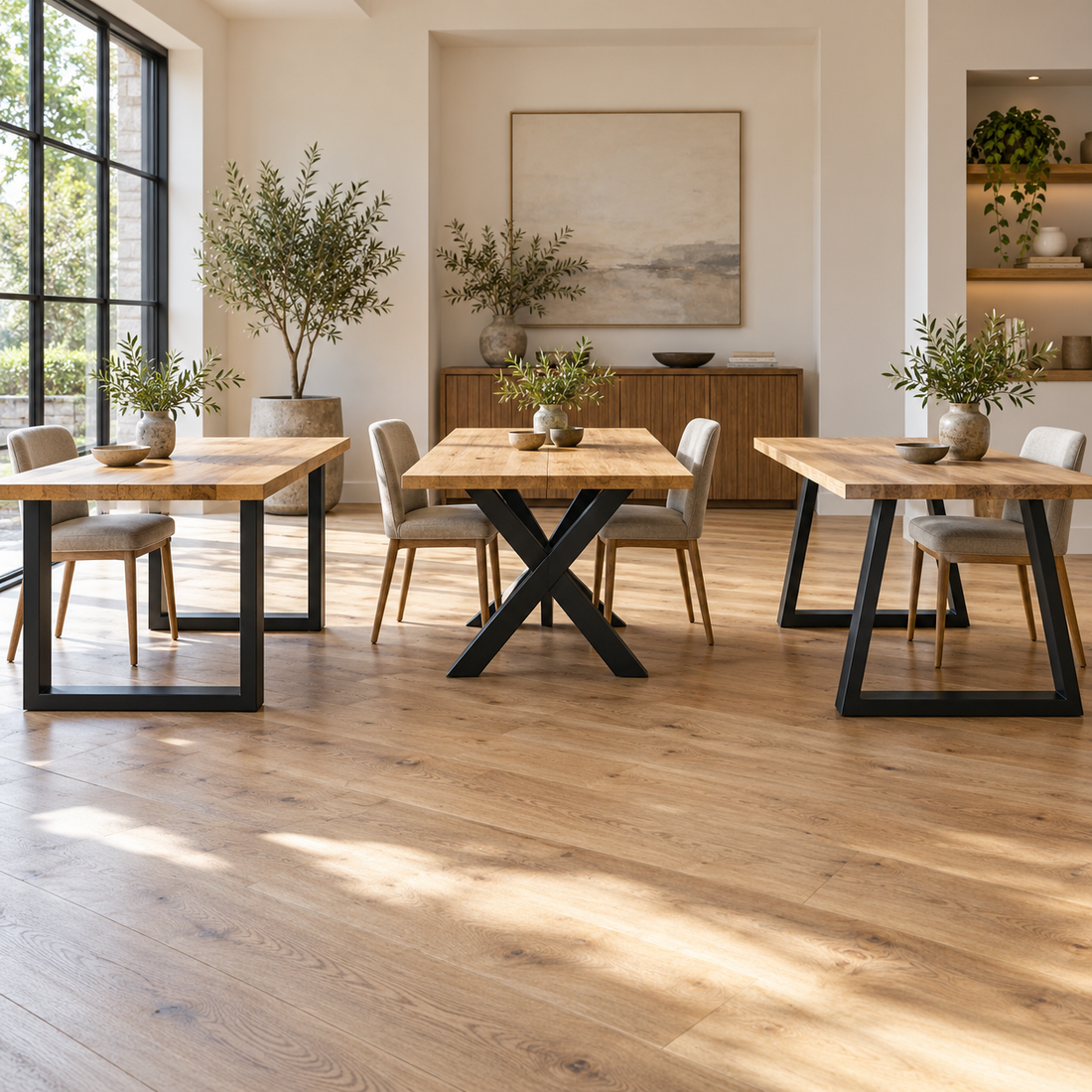
U, X or trapezoid table legs: which shape gives better seating space?
Compare U-shaped, X-shaped and trapezoid metal table legs by end seating, knee room, chair position, tabletop size and visual weight.
Read the guide : U, X or trapezoid table legs: which shape gives better seating space?