
Ideas, details & craftsmanship
Metal table legs for a solid-wood top: what to check before drilling
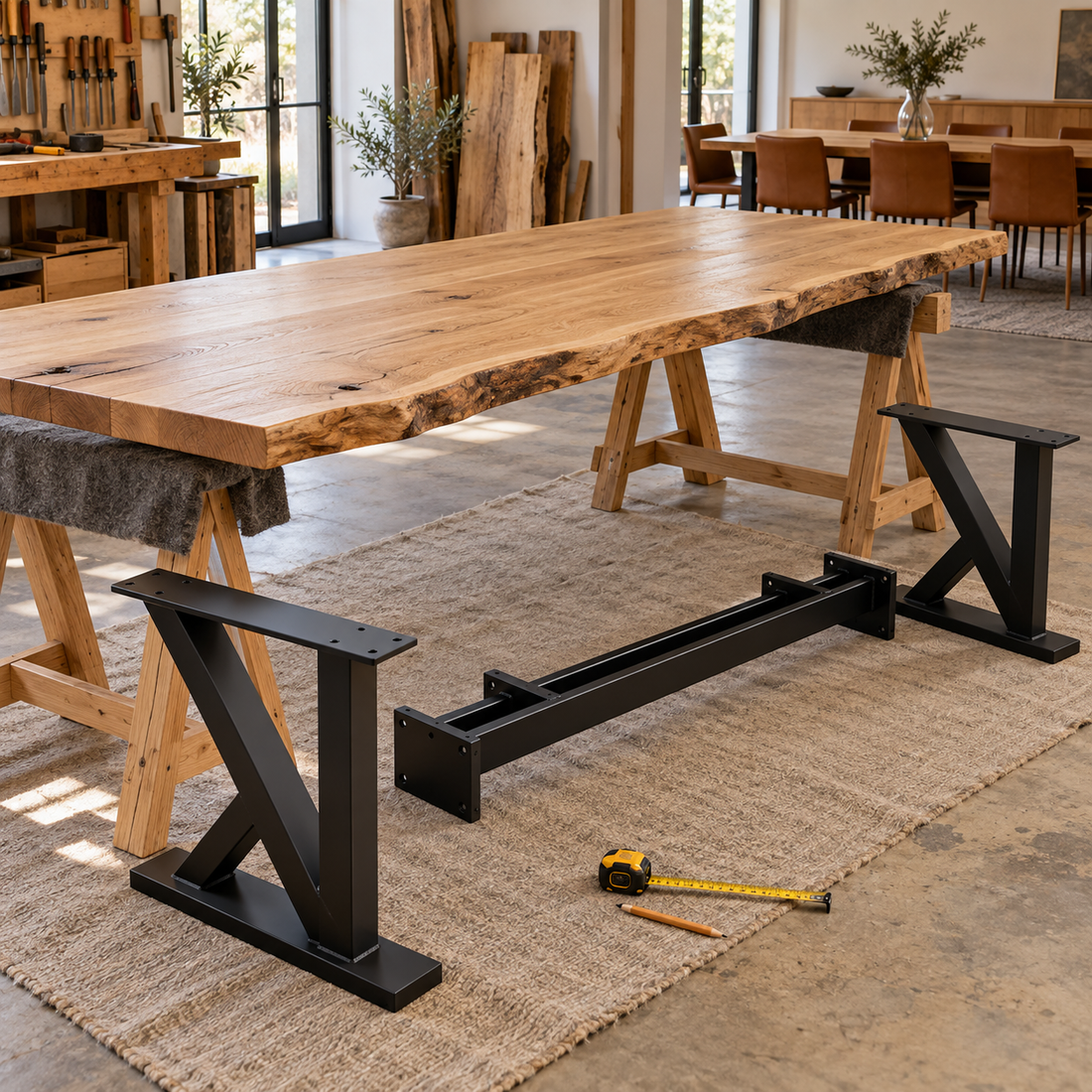
For a thick solid-wood tabletop, choose the base only after you know the top's finished length, width, thickness, wood construction and weight. A heavy slab needs a support layout and fastening method confirmed for that exact combination. The safest buying decision is based on the product drawing and the tabletop maker's fixing guidance, not on thickness or appearance alone.
Start with the tabletop, not the leg style
Solid wood is not one standard material. A glued panel, a live-edge slab and a top made from several boards can differ in grain direction, flatness, weight and movement. Record the finished measurements after sanding and finishing. Photograph the underside and mark cracks, resin-filled areas, existing inserts, battens and any uneven zones.
If the top is still acclimatising or has not reached its final dimensions, postpone drilling. The mounting position must be planned on the finished underside.
Check how the structure supports the top
Two separate legs offer flexible spacing, but the tabletop and fixings must keep them aligned. A connected base with a central rail defines the relationship between both supports and can simplify alignment. Neither format is automatically suitable for every slab.
Compare the mounting-plate area, distance between supports, outer footprint and any central rail with the product drawing. Keep the supports on sound wood and away from weak edges, deep cracks or voids. For a long or unusually heavy top, ask the tabletop supplier and base manufacturer to confirm the proposed layout.
Allow solid wood to move
Wood changes dimension as indoor humidity changes, mainly across the grain. A fixing detail that locks a wide solid-wood top rigidly across its width can encourage splitting or distortion. Use the movement allowance, inserts, washers, slots or other fixing method specified for the tabletop and base. Do not enlarge holes or substitute hardware without guidance.
Choose fasteners from verified measurements
Measure the actual tabletop thickness at every mounting zone and compare it with the mounting plate and the specified fastener. The available drilling depth must leave a safe margin below the visible surface. Pilot-hole diameter, depth and edge distance depend on the timber and fastener, so use the supplied instructions or ask before drilling.
More screws do not correct an unsuitable plate position, damaged timber or a support system that was not designed for the top.
Test seating and access before assembly
- Mark the tabletop outline and support footprint on the floor.
- Place the intended side and end chairs around it.
- Check knees, feet, chair legs and the path used to sit down.
- Measure doors, stairs and turns on the delivery route.
- Confirm whether the top and base can be carried and assembled safely in the final room.
Information to prepare before ordering
| Item | What to record | Why it matters |
|---|---|---|
| Top | Length, width, thickness and weight | Support and handling |
| Wood | Species and construction | Fixing and movement guidance |
| Underside | Photos, inserts, cracks and obstructions | Usable mounting area |
| Seating | Chair width, arms and end seats | Clearance around supports |
| Route | Doors, stairs and final assembly space | Delivery and installation |
Compare the appropriate construction
Browse individual metal table legs when flexible placement is important. Compare table bases with a central rail when you want a connected structure. For either option, select the exact variant first and compare its drawing with the finished tabletop.
If compatibility is not documented, send TopFero the measurements, estimated weight, underside photos and seating plan before ordering. That gives the team enough information for a useful check.
More ideas for your next project
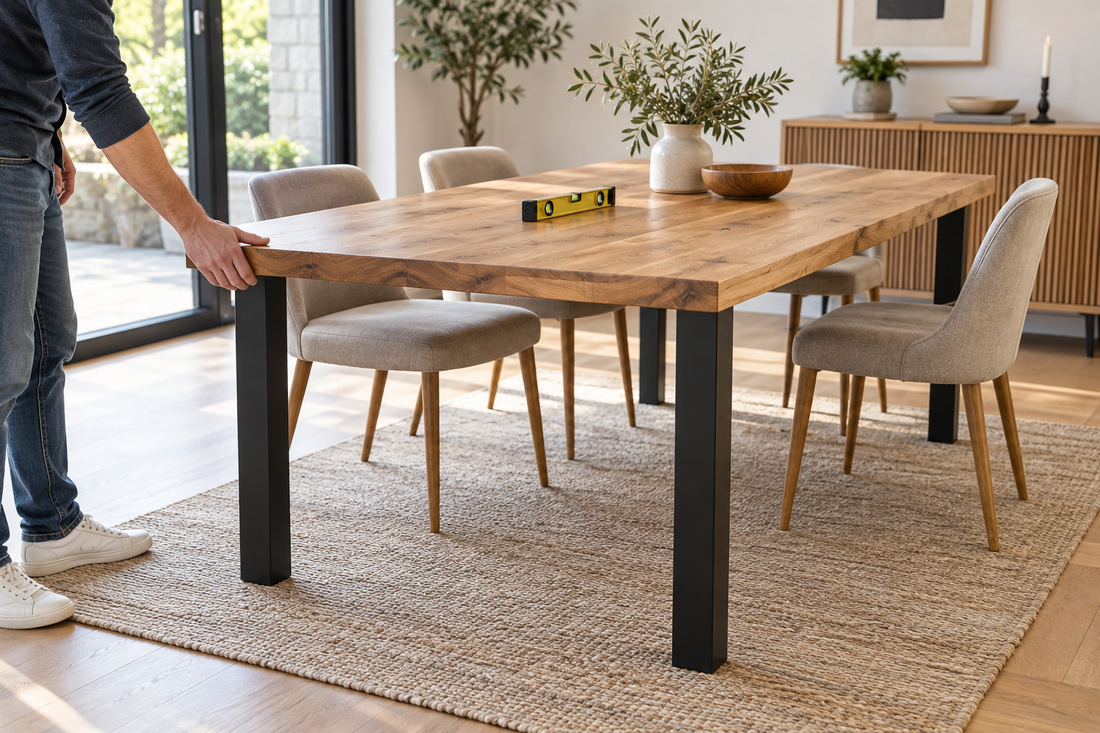
Why does a table wobble? Diagnose it before replacing the legs
Find the real cause of a wobbly table by checking the floor, feet, fasteners, tabletop and frame in the right order.
Read the guide : Why does a table wobble? Diagnose it before replacing the legs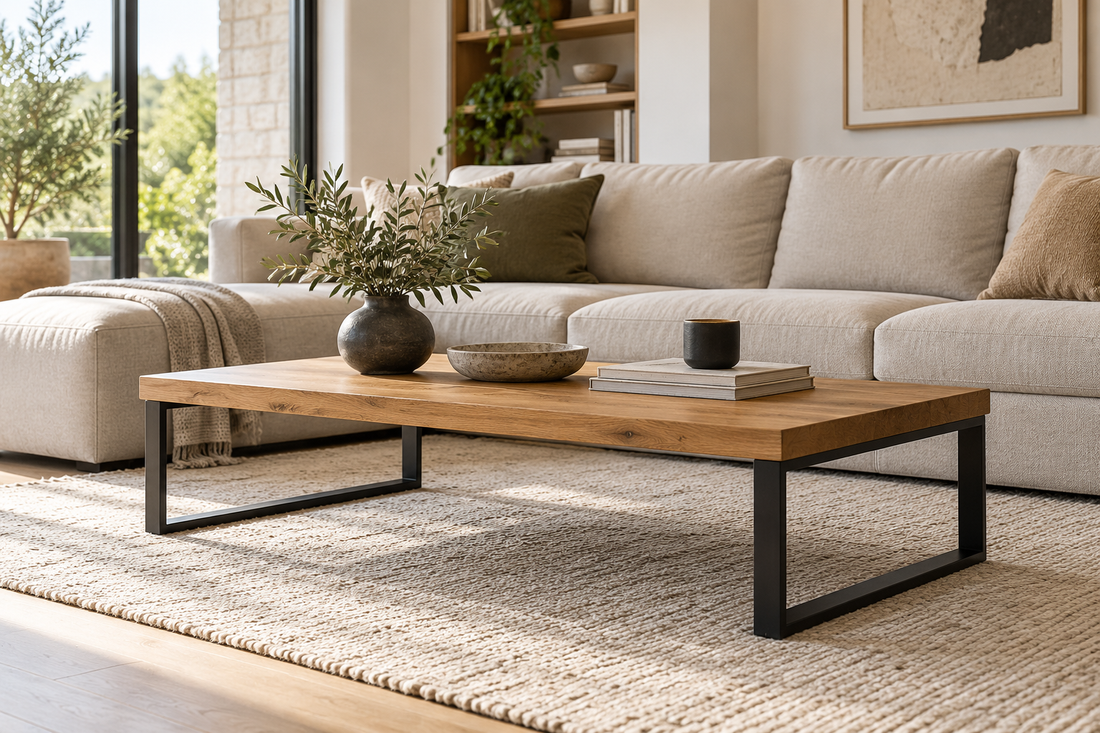
Coffee table height: how to choose the right legs for your sofa
Choose coffee-table height from your sofa seat, tabletop thickness and intended use, then select metal legs for the right finished height.
Read the guide : Coffee table height: how to choose the right legs for your sofa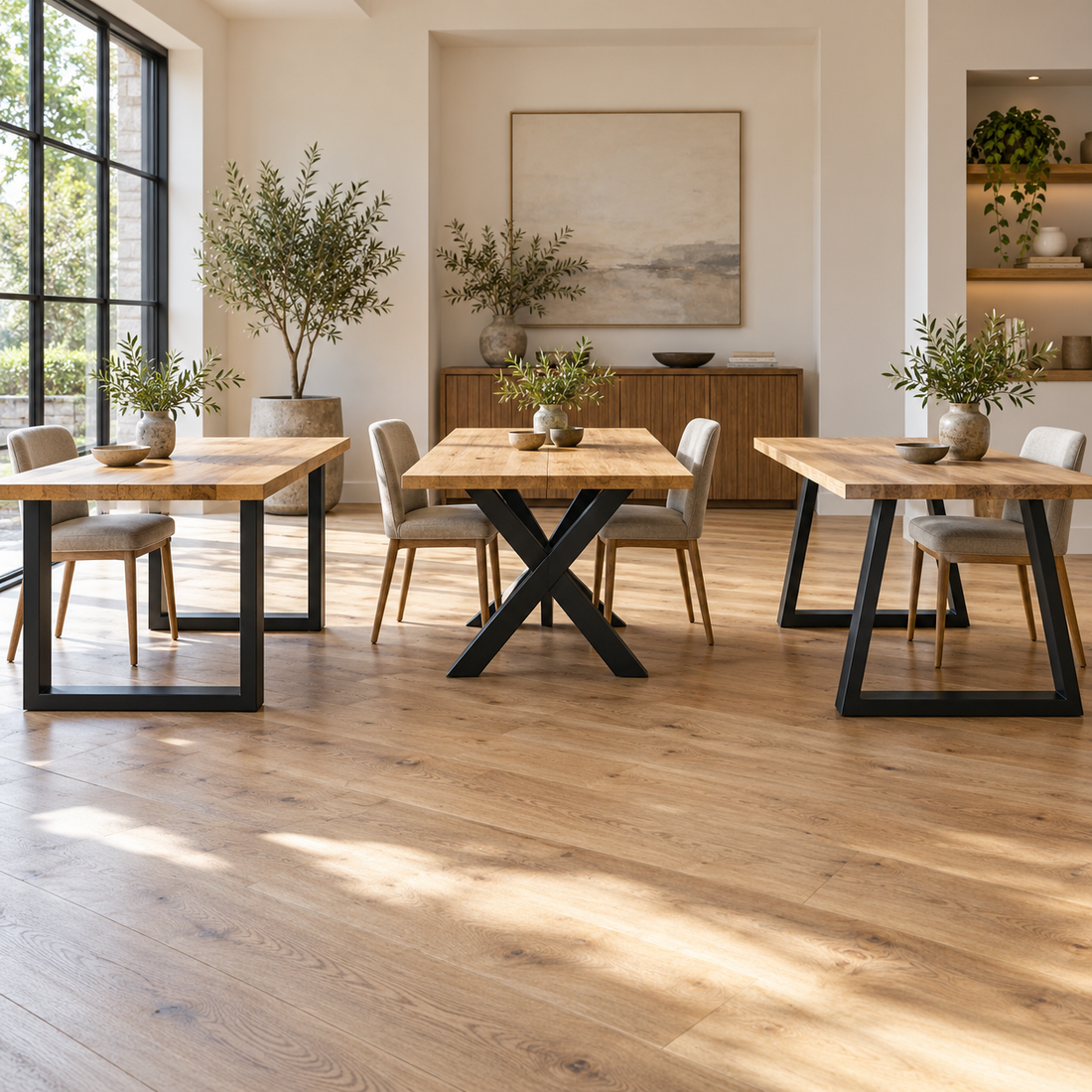
U, X or trapezoid table legs: which shape gives better seating space?
Compare U-shaped, X-shaped and trapezoid metal table legs by end seating, knee room, chair position, tabletop size and visual weight.
Read the guide : U, X or trapezoid table legs: which shape gives better seating space?