
Ideas, details & craftsmanship
Why does a table wobble? Diagnose it before replacing the legs
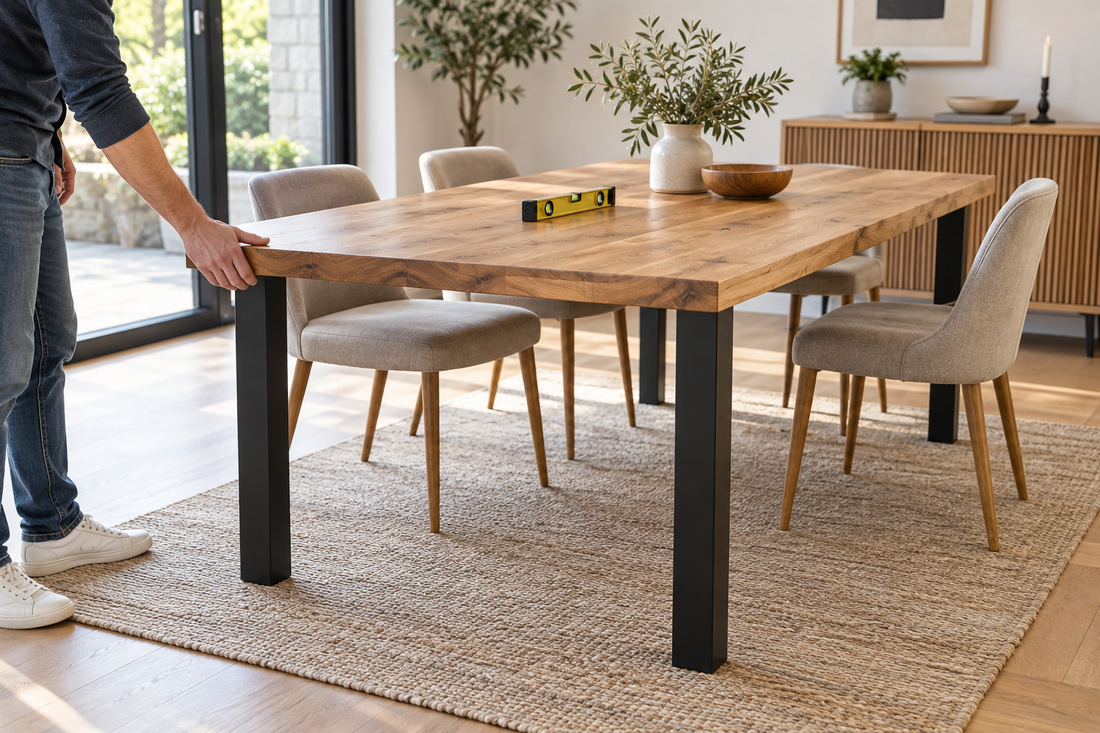
A table can wobble because the floor is uneven, one foot does not touch, a fixing has loosened, the tabletop has moved, or the frame lacks stiffness. Diagnose the source before buying new legs.
Start on a known flat surface
Remove objects from the table and move it away from a rug or soft joint. Press each corner gently. Rotate the table 90 degrees: if the problem changes, the floor is probably involved; if it stays with the same table corner, inspect the table.
Check every contact point
Look for a missing pad, damaged adjustable foot or debris underneath. Adjust only the levelling feet designed for that purpose. Do not wedge loose scraps under a leg as a permanent repair.
Inspect fasteners and wood
With the table unloaded, check whether screws, inserts and mounting plates are seated correctly. Tighten only to the specified guidance. A stripped hole, cracked timber or moving insert needs repair, not extra force.
Separate rocking from frame sway
Rocking means the feet do not share one plane. Sway means the structure deforms sideways even when all feet touch. A long top with separate legs may need a different support layout or a connected base; confirm compatibility from the exact product drawing.
Measure before replacing legs
Record top length, width, thickness, construction and weight, plus the distance between existing holes. Photograph the underside and mark obstructions. New legs should be selected from these measurements, not from the old hole pattern alone.
Choose a verified replacement
Compare TopFero metal table legs and connected bases by dimensions and construction. If the cause or fit is unclear, send the measurements and underside photos before ordering.
More ideas for your next project
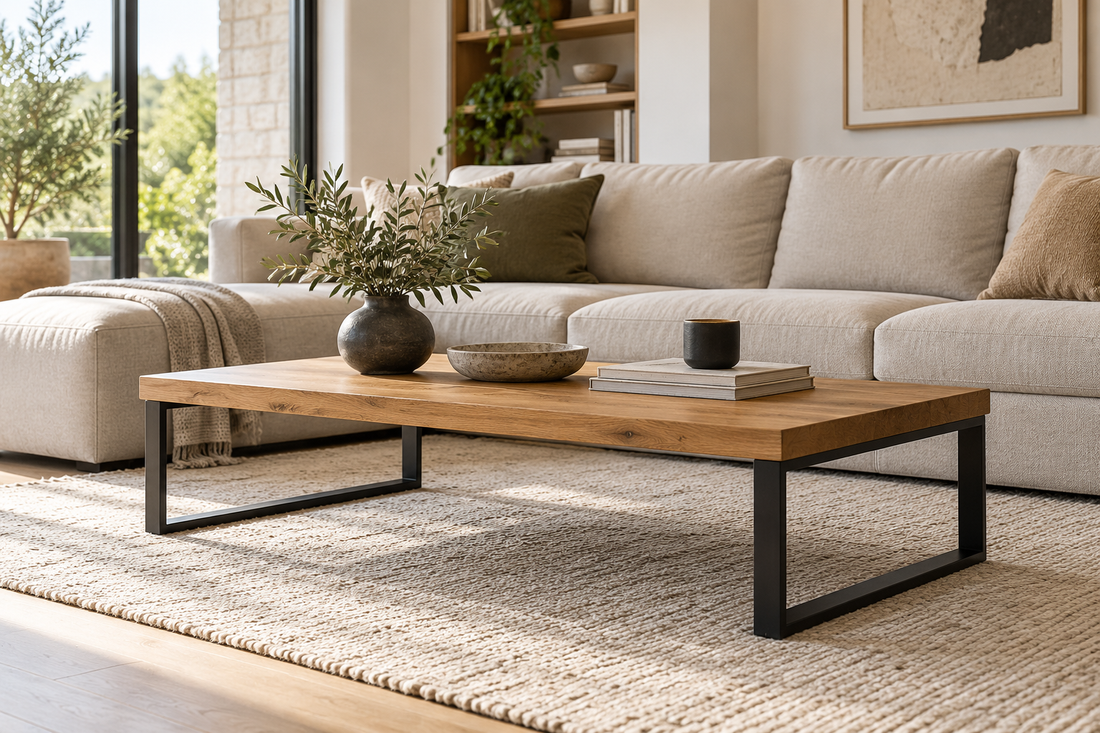
Coffee table height: how to choose the right legs for your sofa
Choose coffee-table height from your sofa seat, tabletop thickness and intended use, then select metal legs for the right finished height.
Read the guide : Coffee table height: how to choose the right legs for your sofa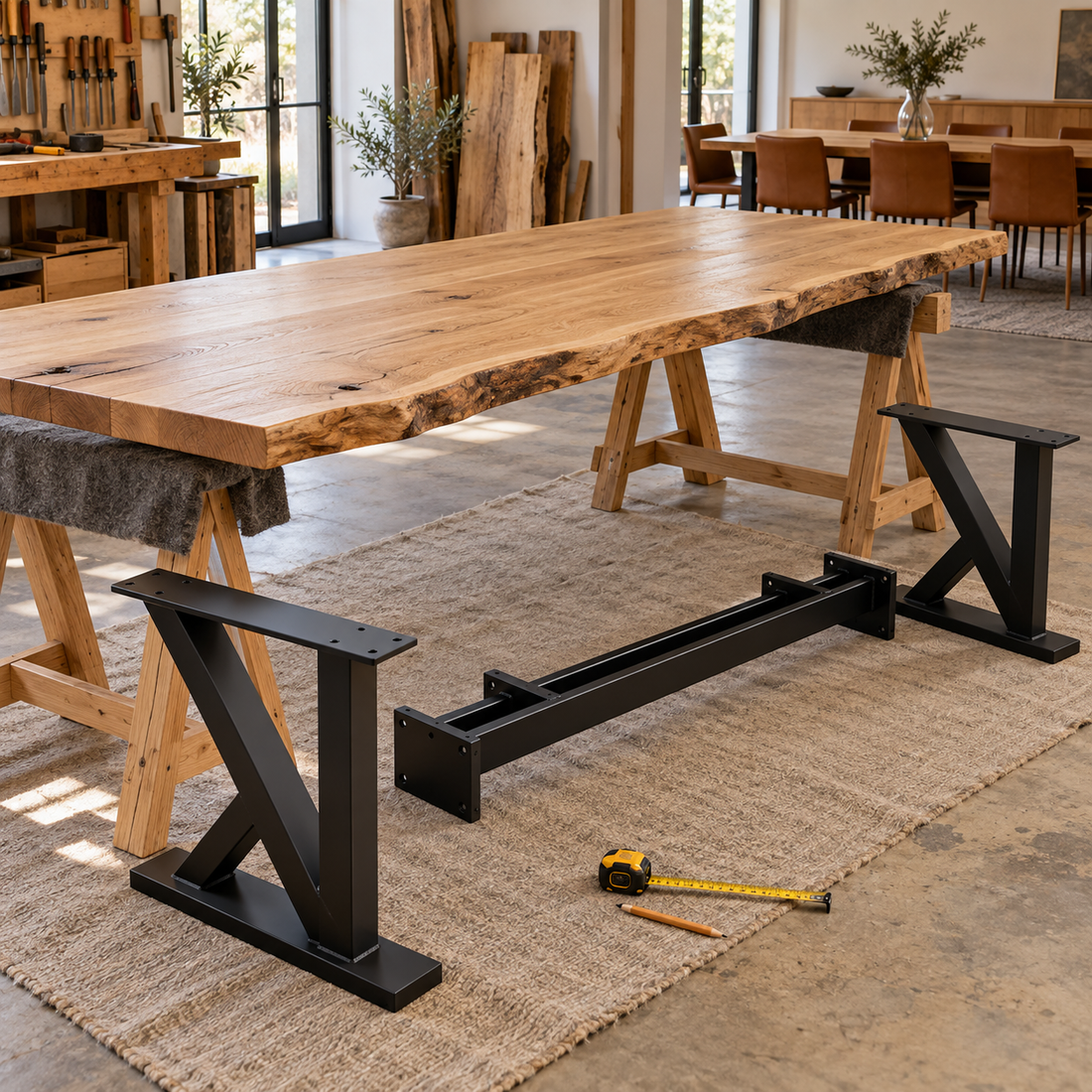
Metal table legs for a solid-wood top: what to check before drilling
Choose metal legs for a solid-wood tabletop by checking the slab, support layout, movement allowance, fasteners, seating clearance and total weight.
Read the guide : Metal table legs for a solid-wood top: what to check before drilling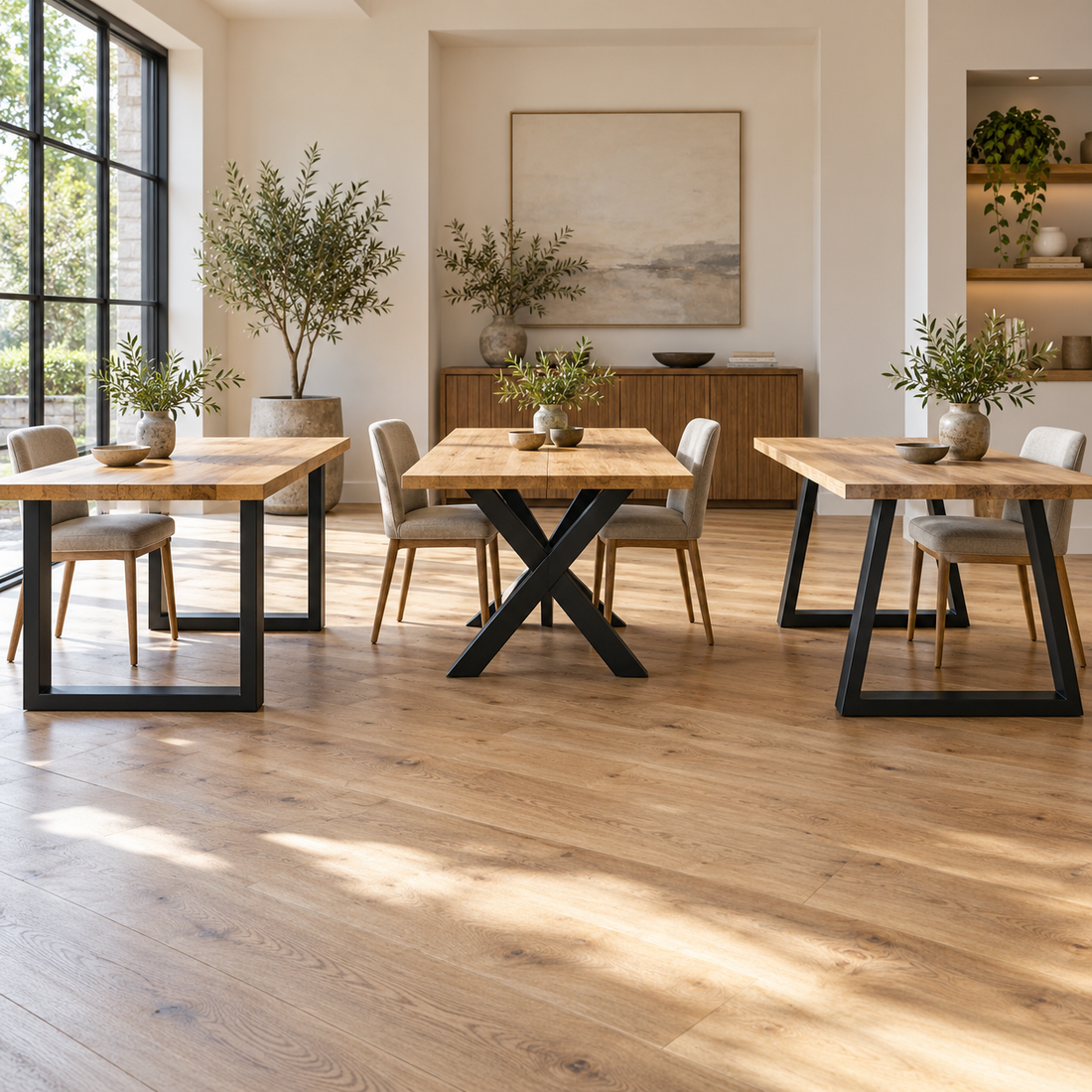
U, X or trapezoid table legs: which shape gives better seating space?
Compare U-shaped, X-shaped and trapezoid metal table legs by end seating, knee room, chair position, tabletop size and visual weight.
Read the guide : U, X or trapezoid table legs: which shape gives better seating space?