
Ideas, details & craftsmanship
Table legs or a complete table base: which should you choose?
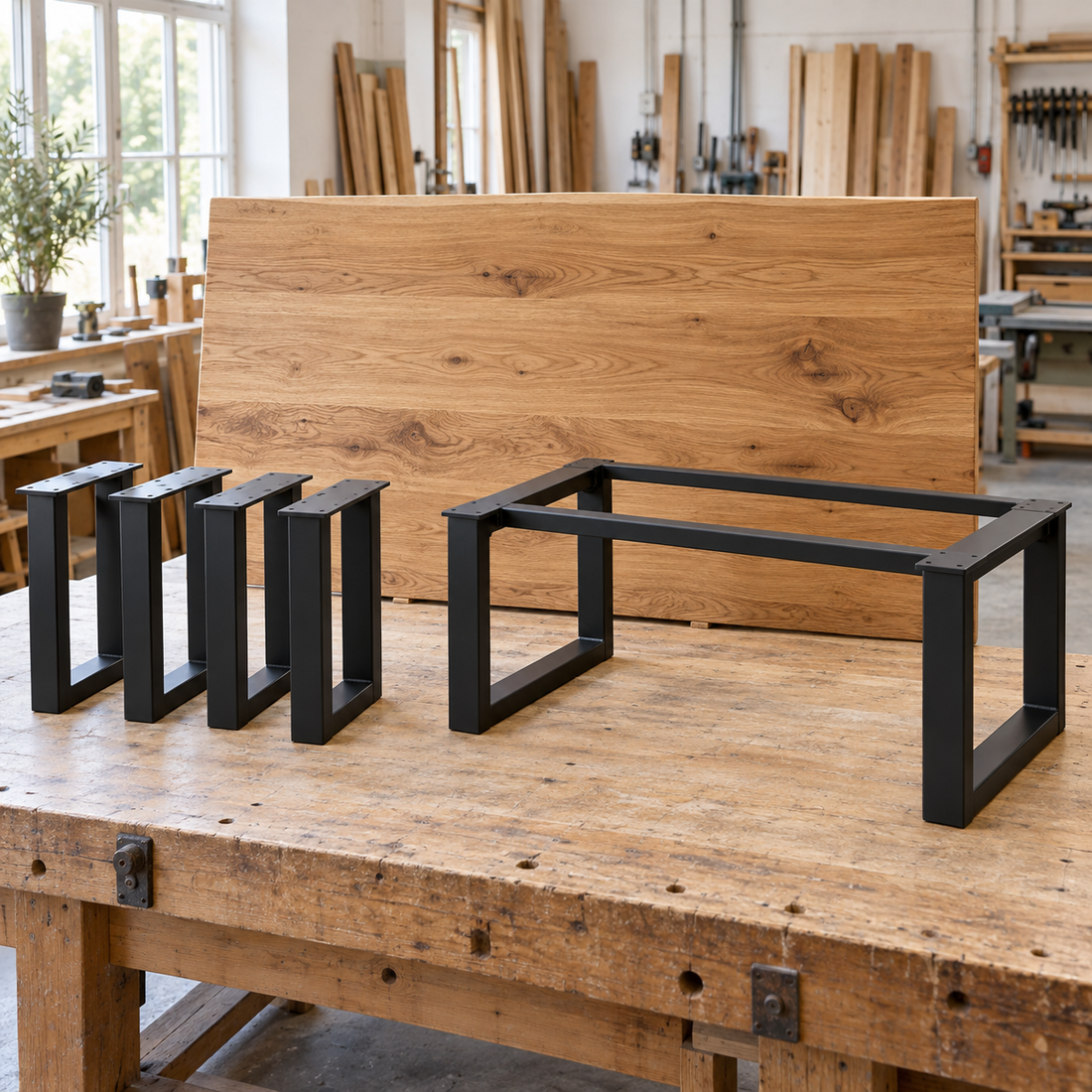
Choose separate table legs when you want a light visual result, flexible placement and easy transport. Choose a complete table base when a large or heavy tabletop needs a connected structure, or when you want the position of both ends fixed by one frame. The better option depends on the tabletop, seating plan and mounting details—not only on appearance.
The structural difference
Separate legs are mounted to the tabletop individually. Their spacing can be adjusted within the limits of the tabletop and mounting plates. A complete base connects the supports with rails or a central structure, so the parts work as one assembly. That connection can reduce dependence on the tabletop for keeping both sides aligned, but every model still has its own limits.
Choose separate legs when flexibility matters
Individual legs are useful when the tabletop size is unusual, access is narrow or the table may need to be dismantled and moved. They also leave more freedom to position the supports around drawers, chair arms or an existing feature under the top.
The trade-off is that every leg must be placed and aligned accurately. The tabletop and fixings also play a larger role in keeping the finished table rigid. Do not assume that adding more fasteners corrects a weak board or an unsuitable layout.
Choose a complete base for a defined structure
A connected base is often easier to position as one unit and keeps the support geometry consistent. It can be a practical choice for a long dining table, a large desk or a top where the supports must remain parallel.
Check the outer footprint, rail position and knee clearance. A strong-looking frame can still block the end seats or collide with chair arms if it is too close to the edge. Compare the real dimensions of the selected variant with the seating plan.
Five checks before deciding
1. Tabletop material and dimensions
Record the length, width, thickness, material and weight. Solid wood, plywood, particleboard, stone and compact board have different fixing requirements. If the product documentation does not confirm your combination, ask before ordering or drilling.
2. Seating positions
Mark every chair position and the proposed support footprint on the floor. Check knees, feet and chair legs at the sides and ends. This simple test often makes the choice clearer than a product photo.
3. Mounting area
Confirm that every mounting plate sits fully on sound material and that the available drilling depth suits the specified fastener. Existing holes, edge profiles, inserts or under-table hardware can change the usable area.
4. Transport and assembly
Measure doors, stairs and the route to the final room. Separate legs usually form smaller packages. A connected base may be simpler to align but can be larger to carry. Check whether the chosen model arrives assembled or in sections.
5. Future changes
If you expect to replace the tabletop later, individual legs can offer more layout flexibility. A complete base gives a defined footprint, so the next top must also suit that geometry and mounting pattern.
Quick comparison
| Decision point | Separate legs | Complete base |
|---|---|---|
| Placement | More adjustable | Defined by the frame |
| Alignment | Each leg must be set out | Supports connected as one unit |
| Transport | Usually smaller parts | Check overall package size |
| Seating | Flexible if positioned well | Check rails and end supports |
| Future tabletop | More layout options | Must suit the base footprint |
Compare the actual options
Browse individual metal table legs when placement flexibility is the priority. For a connected construction, compare table bases with a central rail and check the dimensions of the exact variant.
Before ordering, keep the tabletop measurements, material, estimated weight and a chair layout ready. These details allow a meaningful compatibility check.
More ideas for your next project
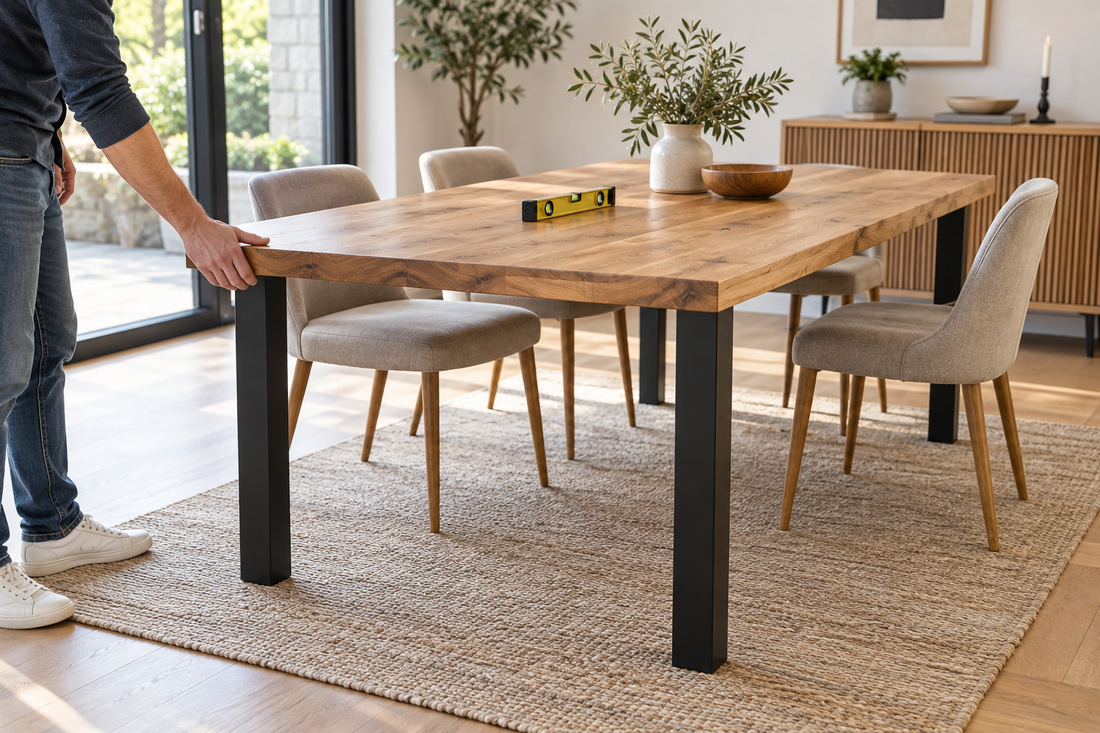
Why does a table wobble? Diagnose it before replacing the legs
Find the real cause of a wobbly table by checking the floor, feet, fasteners, tabletop and frame in the right order.
Read the guide : Why does a table wobble? Diagnose it before replacing the legs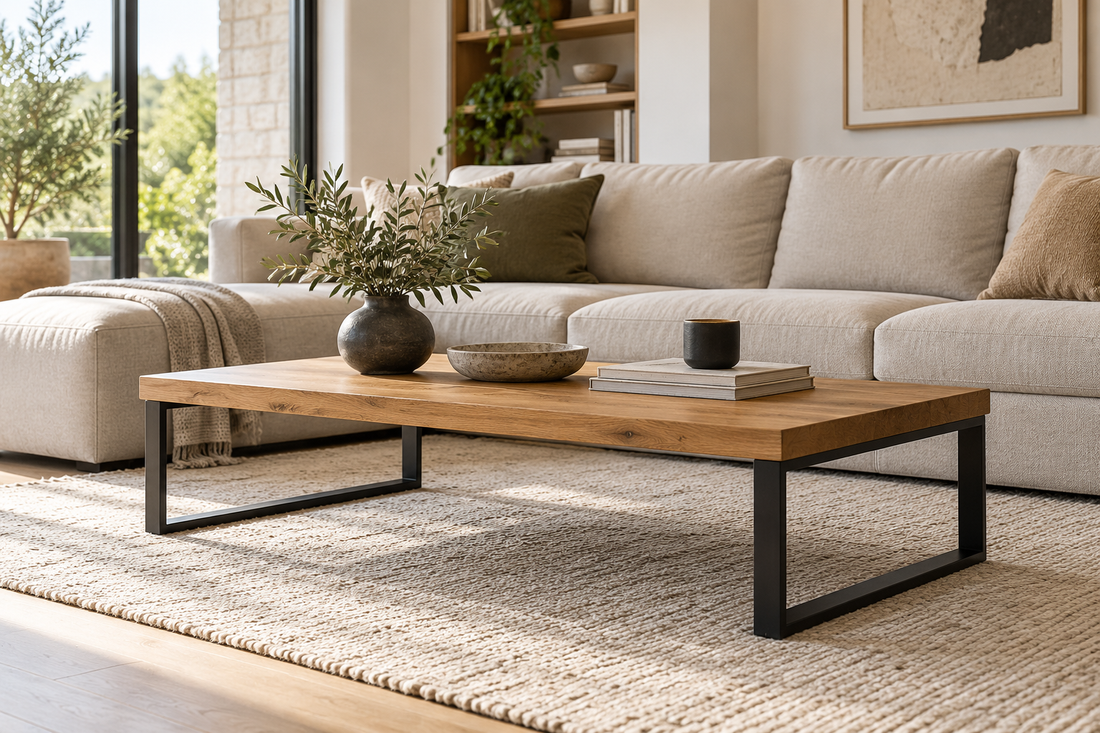
Coffee table height: how to choose the right legs for your sofa
Choose coffee-table height from your sofa seat, tabletop thickness and intended use, then select metal legs for the right finished height.
Read the guide : Coffee table height: how to choose the right legs for your sofa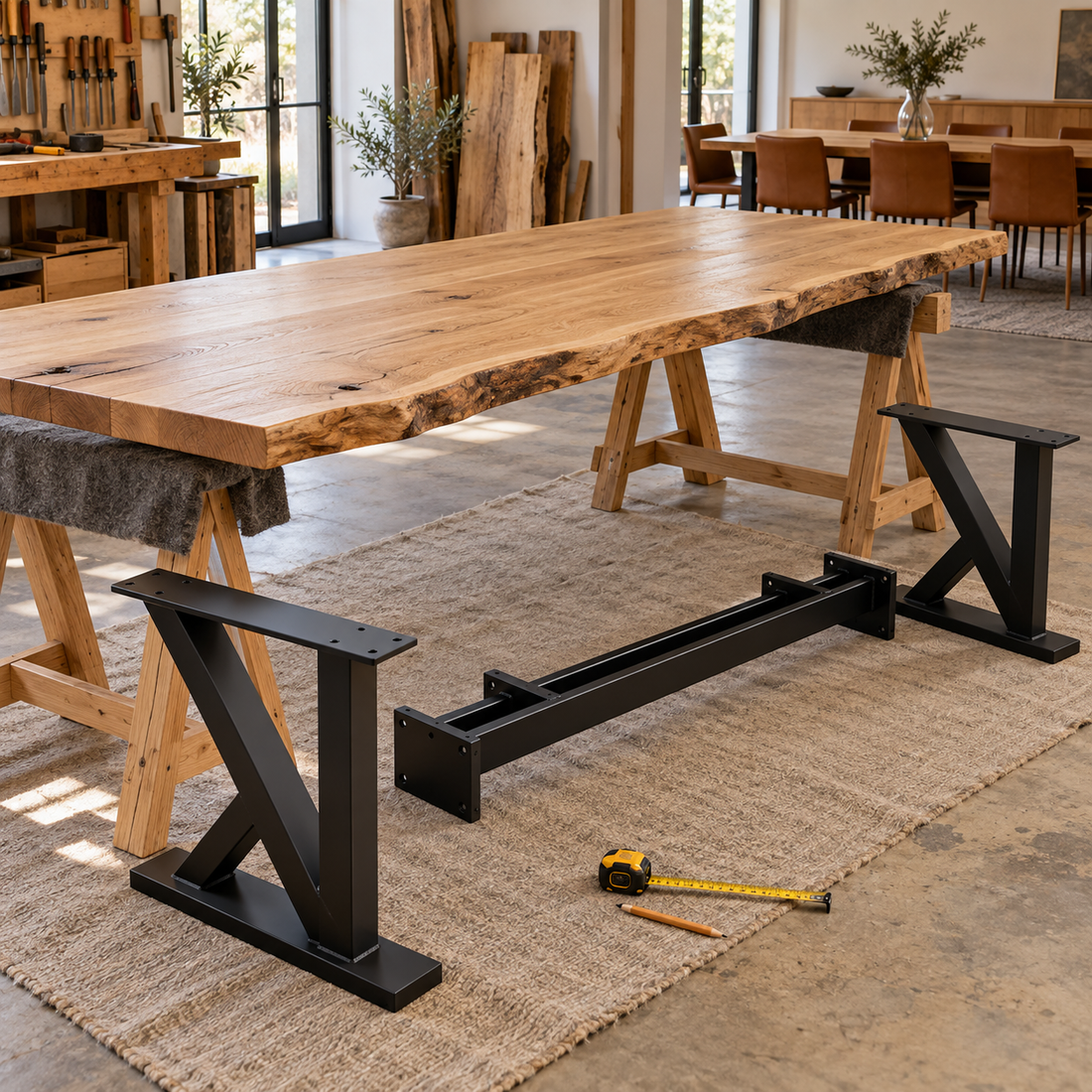
Metal table legs for a solid-wood top: what to check before drilling
Choose metal legs for a solid-wood tabletop by checking the slab, support layout, movement allowance, fasteners, seating clearance and total weight.
Read the guide : Metal table legs for a solid-wood top: what to check before drilling